





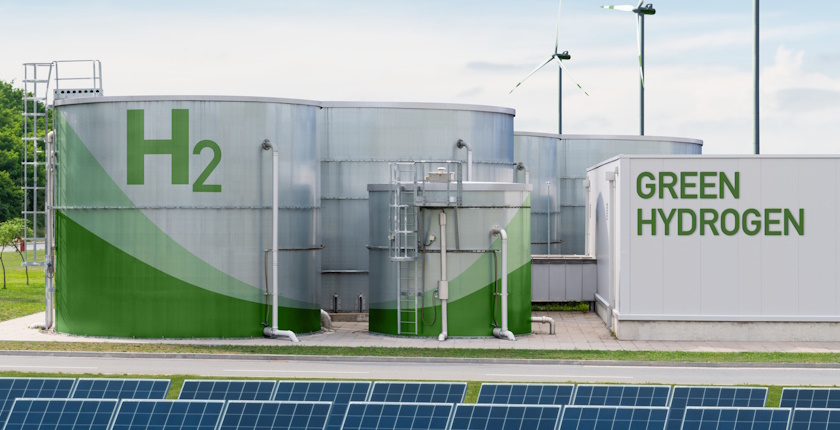
Photo: iStock


Seven projects for 1.88 GW of total electrolyzer capacity turned out to be unfeasible even with grants won at the second European Hydrogen Bank auction, out of 2.34 GW overall. The developers withdrew, with some citing policy and infrastructure delays and uncertainty. A project from the first renewable hydrogen auction also pulled out.
The European Commission has invited ten projects from the reserve list of the second European Hydrogen Bank auction to start preparing documentation for signing grant agreements, after seven that were initially selected withdrew. The round, completed in May, resulted in 15 projects for renewable hydrogen winning support, for 2.34 GW of total electrolyzer capacity.
Five endeavors remained in the general category, for just 453.46 MW overall, and the remaining three are in the maritime segment. They account for 108.5 MW. The ten reserve projects envisage 774 MW, compared to the 1.88 GW that dropped out, including the three biggest proposed systems.
Stuck at completion guarantees
Some developers of the withdrawn proposals weren’t able to provide completion guarantees. Completion guarantees are worth 8% of the grant, S&P Global noted in a report. Companies cited policy and infrastructure delays and uncertainty.
Four sites are in Spain, two in Germany and the seventh one is in the Netherlands: the Zeevonk electrolyser, the largest of all. It would have 560 MW and produce 411,000 tons over ten years, receiving EUR 0.6 per kilogram.
Beneficiaries receive premiums from the European Hydrogen Bank budget that compensate for the difference between the production price and the amount that buyers offer.
European Hydrogen Bank mechanism designed to weed out unfeasible investments
Before the end of the year, the European Commission expects to publish the final list for the said IF24 auction. One project recently dropped out from the first round as well.
“The auction’s completion guarantee is working as expected in weeding out companies that have bid too low, or were forced to reassess their project maturity or financial viability between bidding and having to provide the completion guarantee,” EU Innovation Fund Policy Officer Johanna Schiele said.
The withdrawn projects could still head for implementation if they complete the financing structure.
Under the second round within the European Hydrogen Bank mechanism, EUR 1.2 billion was available, but only EUR 992 million rewarded.
Be the first one to comment on this article.