








Photo: Jcomp on freepik.com


Greece aims to host a new batch of agrivoltaics, based on a bill of law that the Ministry of Environment and Energy submitted to Parliament. It includes subsidies.
Several proposed provisions concern carbon capture and storage (CCS), energy storage and renewable energy. Among them, a goal is set for the installation of 130 MW of agrivoltaics across the country.
Specifically, up to 10 MW would be allowed in each periphery (region), with individual projects at a maximum of 200 kW. The agrisosolar panels must be mounted at over 2.1 meters above the ground, in order to allow agricultural production below them. Alternatively, they can be installed on top of greenhouses.
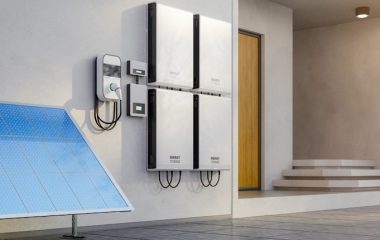
Another interesting novelty is that the beneficiaries would be able to combine agrivoltaics with battery storage units. They would need to provide at least one hour of storage and wouldn’t be allowed to store energy from the grid, but only from the solar plant.
When it comes to the financial aspect, the agrivoltaic facilities would benefit from a EUR 65 per MWh tariff. It remains to be seen whether the sum is sufficient for support, as costs of photovoltaics raised at such height are higher than for traditional systems. The Panhellenic Association of Agricultural Photovolatics (PSAF) has warned that if the tariff is deemed too small, farmers will not invest in the technology and the entire program will be fruitless.
Applications to commence in February 2026
Eligible applicants are professional farmers or companies that have signed agreements with owners of cultivated fields and greenhouses. Each may install up to two agrivoltaic units.
Investors would be able to submit their applications for connection terms from February 2026. Consequently, the Hellenic Distribution Network Operator (HEDNO or DEDDIE) would decide on each project within two months, until the local limit of 10 MW is reached.


Be the first one to comment on this article.