






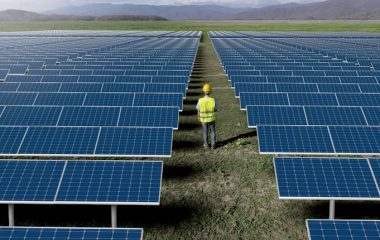
Photo: freepik.com


Renewable electricity production reached a new high last year in Greece, amidst increased curtailments and a low lignite share.
According to official data and the Green Tank’s analysis, renewable energy accounted for 46.7% (26,381 GWh) of output. Lignite fell to a historic low, 4.8% or 2,723 GWh, and natural gas contributed 41.3% (23,338 GWh), the most so far.
Notably, Greece expanded its net exports in 2025. The result spiked tenfold to over 3 TWh, with strong demand from neighboring countries, such as Albania, North Macedonia and Bulgaria. This was the result of low hydroelectric reserves elsewhere in the Balkan region, as well as Ukraine’s increased import needs.
Curtailments plagued the renewables sector, reaching 6.6% of total green electricity generated, or 1,867 GWh. In fact, they doubled from the 968 GWh of 2024, with negative price hours also becoming more frequent in the day-ahead market (DAM).
A jump in curtailments is expected during the spring season. Last year, 2.5 GW to 3 GW in new renewable projects have been connected to the grid, according to estimations, with final official data not yet available. At the same time, the first battery storage units are expected to come online gradually by the middle of 2026. Therefore, storage will not be able to provide substantial relief in time for renewables.
Carbon intensity falls to new low
These developments affected the country’s carbon intensity and overall emissions. Lignite plants fell to a historic low (3.68 million tons), though gas plants reached a historic high, 8.8 million tons.
For 2025, the carbon intensity of electricity production stood at 264.7 grams of CO2 per kWh, the lowest ever recorded, Green Tank noted. However, the decrease from 2024 was only 2.2%, a significantly smaller improvement than in the previous two years, when carbon intensity recorded an average annual reduction of 14.5%.

Be the first one to comment on this article.