





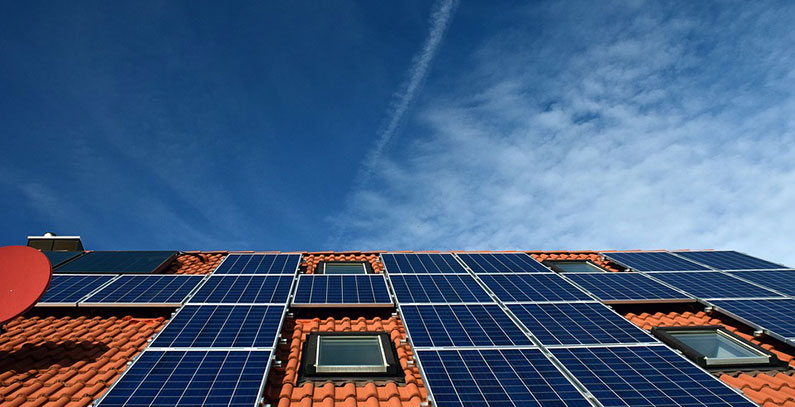
Slika: Pixabay


The Government of the Federation of Bosnia and Herzegovina decided to keep surcharge fee in Q2 and Q3 of 2020 at the same level as in Q1. The fee is paid by electricity consumers through their electricity bills to fund the feed-in tariff subsidies for the privileged power producers from renewable energy sources.
The surcharge fee paid by electricity consumers through their electricity bills to fund the feed-in tariff scheme for privileged power producers will remain at the same level in II and II quarter of 2020 – 0.002555 BAM/kWh (0.00130635 EUR/kWh).
The decision on feed-in tariff surcharge fee was one of the two adopted at the urgent telephone’ session of the Government of the Federation of Bosnia and Herzegovina.
The last time surcharge was increased in March 2019
The surcharge fee was increased last time in March 2019 from 0.002128 BAM/kWh (0.001088 EUR/kWh), the amount which was valid throughout the entire 2018, to 0.002555 BAM/kWh (0.001306 EUR/kWh).
According to the FBiH Government, the surcharge fee is paid by all end electricity consumers in FBiH through their electricity bills.
Slovenia temporarily freed small business customers and households from the obligation to pay surcharge
Two weeks ago Slovenia temporarily freed small business customers and households from the obligation to pay green power surcharge.
Money collected is the revenue of the Operator for Renewable Energy Sources and Efficient Cogeneration (Operator za obnovljive izvore energije i efikasnu kogeneraciju – OIEiEK), which further uses it to pay the incentives to the privileged power producers, to finance its operational expenses and the costs of balancing the electricity system due to variable production from the renewable energy sources and efficient cogeneration.



Be the first one to comment on this article.