







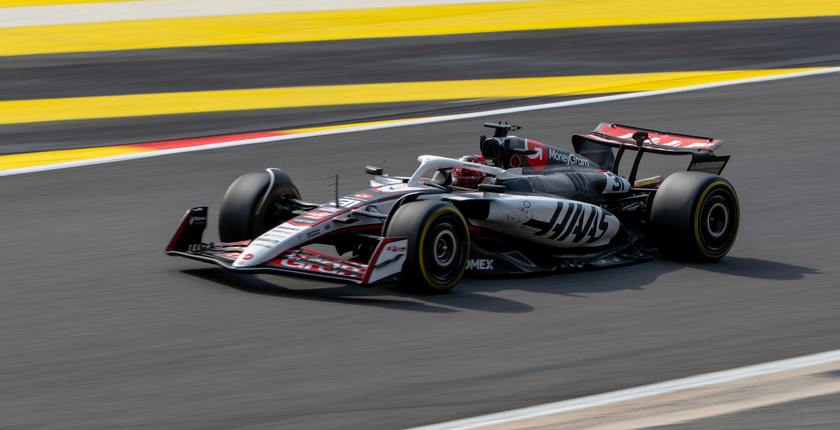
Photo: Pexels


Formula 1, the world’s most popular car racing championship, has managed to reduce its carbon emissions to well under 200,000 tons annually. However, carbon-tracking software provider Greenly estimates that the championship’s actual carbon footprint, including emissions from spectators, exceeds one million tons per season.
In July 2025, Formula 1 said that it had reduced its carbon emissions by 26% by the end of 2024 against the 2018 baseline and that it was on track to achieve its net-zero goal by 2030.
During the 2024 season, F1’s carbon footprint was 168,720 tCO2e (tons of CO2 equivalent), down from 228,793 tCO2e in 2018, it said.
The Paris-based Greenly, on the other hand, finds that the actual figure is several times higher, at as much as 1.04 million tCO2e per year.
F1’s data covers logistics, such as freight transportation, which accounts for 37% of the emissions, along with team and staff travel (36%), factories and facilities (14%), operations at circuits (13%), and on-track cars (1%).
Greenly: Emissions associated with F1 spectators amount to over 875,000 tons per year
However, the overall footprint of the car racing championship involves much more, according to Greenly. It claims that factoring in spectator travel, accommodation, catering, merchandise, TV and streaming broadcasts, and on-site consumption would add as much as 875,767 tCO2e to the total figure.
According to Greenly, 655,600 tCO2e is generated by spectator travel, 122,326 tCO2e by accommodation, 49,201 tCO2e by food services, 20,049 tCO2e by merchandise, 28,081 tCO2e by broadcasts, and 509 tCO2e by on-site consumption.
Although F1 has managed to reduce emissions by optimizing freight transportation and using renewable energy and sustainable aviation fuels, indirect emissions remain the dominant source of its climate impact, according to Greenly.
Changing fans’ behavior could help F1 achieve net zero
F1 has around 6.15 million spectators a year, and changing their behavior could help achieve net zero. Greenly’s recommendations to fans include choosing nearby races, traveling by train, bus, or electric vehicles, sharing car rides, avoiding flights, staying close to circuits, watching races from home, and combining race trips with other planned travel.



Be the first one to comment on this article.