


Green hydrogen could cover up to 12 percent of global energy consumption in 2050, according to a report by the International Renewable Energy Agency (IRENA). It would significantly affect geopolitical and geoeconomic shifts and create new global relations in energy trade. The hydrogen economy hints at new global power dynamics, IRENA points out.
With incentives stemming from climate action and an agenda to cut net emissions to zero, the share of green hydrogen is on track to reach 12 percent of total global energy use by 2050, IRENA estimates. The increase in investments and trade in green hydrogen on the energy market will probably increase economic competitiveness with new bilateral agreements and affect the foreign policy landscape, different from those from the 20th century, it said. The current value of the growing trade and targeted investments in a market is USD 174 billion, the agency estimates.
The transition is not a fuel replacement, but a shift to a new system
“Hydrogen could prove to be a missing link to a climate-safe energy future”, said Francesco La Camera, Director-General of IRENA. But hydrogen is not a new oil. And the transition is not a fuel replacement but a shift to a new system with political, technical, environmental, and economic disruptions.”
Green hydrogen brings new players to the market, diversifies routes and supplies, and shifts power from a few too many, La Camera explains. He adds the hydrogen market could become democratic and inclusive in international cooperation and open opportunities for developed countries, as well as for developing countries.
One third of hydrogen goes to international trade
IRENA estimates that in 2050, over 30 percent of the hydrogen produced would be in international trade, more than today’s share of natural gas.
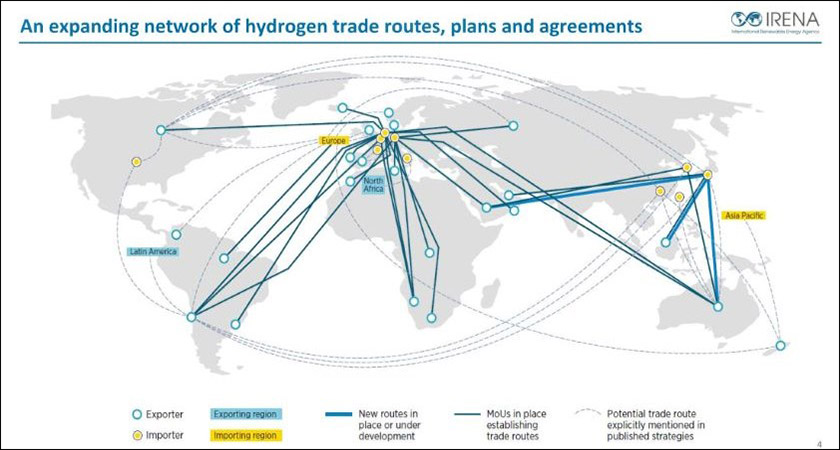
Countries that have not traditionally traded in energy are currently establishing bilateral energy relations for hydrogen. More actors are emerging on the world stage in the hydrogen trade, so it is less likely that the hydrogen trade will become “weaponized and cartelized,” unlike the geopolitical influence of oil and gas, the agency concludes.
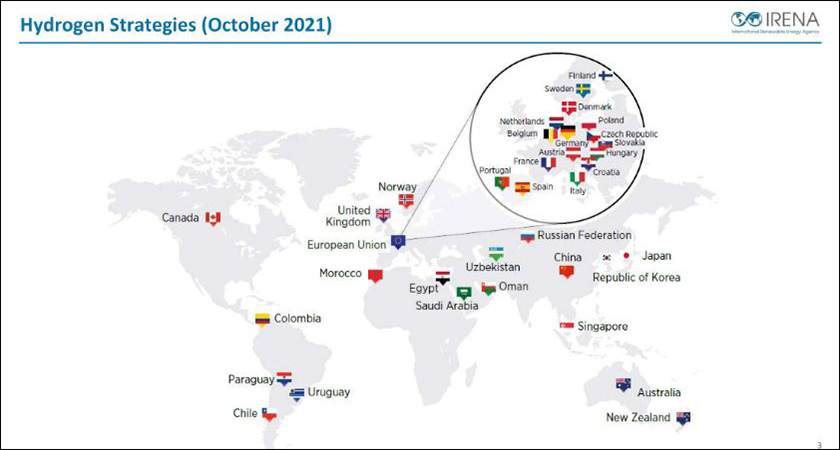
With more than 30 countries and regions already planning active trade today, international hydrogen exchange will also grow significantly, the document reveals. Countries like Germany and Japan, which are expected to be importers, are already developing diplomacy in that direction, the report said.
Hydrogen is a desirable way to diversify the economies
Fossil fuel exporters such as Australia, Oman, Saudi Arabia, and the United Arab Emirates consider hydrogen as a desirable way to diversify the economy, the report said. IRENA notes that more comprehensive economic transition strategies would be needed, adding that hydrogen alone would not compensate for losses in oil and gas revenues.
Competitiveness of green hydrogen
The potential for hydrogen production significantly exceeds global demand, the report said. Countries that will have cheaper energy from renewable sources will be in the best position to produce competitive green hydrogen. Chile, Morocco, and Namibia are importers of energy today, and they will appear as exporters of green hydrogen, says IRENA.
The potentials of Africa, the Middle East, Oceania, and the Americas limit the risk of “export concentration”, the document says. However, many countries will need technology transfers, infrastructure, and large investments, it added.
Demand for hydrogen will not grow until the middle of the next decade
Hydrogen is predicted to affect geopolitical relations in several phases. A further race for technology leadership is expected during this decade, while demand for hydrogen should increase only in the middle of the next decade, according to the agency’s report.
Green hydrogen will be competitive compared to hydrogen from fossil fuels, first in China, Brazil, and India, IRENA predicts. In Europe, green hydrogen was already affordable in 2021, due to the increase in the price of natural gas, it said. Refurbishing existing natural gas pipelines could facilitate trade and increase the demand for hydrogen, the agency notes.
Renovating existing pipelines could facilitate trade and increase hydrogen demand
Countries with great potential in renewable energy sources and participation in hydrogen production and distribution can increase economic competitiveness, the authors believe. The manufacturing of equipment such as electrolyzers and fuel cells could especially start the economy. China, Japan, and European countries have already developed an advantage in production, but further development hinges on innovations, the report says.
Hydrogen for greater energy independence
Green hydrogen can strengthen energy independence, security, and resilience. First of all, by reducing dependence on imports and price instability, as well as by strengthening the flexibility of the energy system. However, raw materials needed for hydrogen production and renewable technology, shortages, or price fluctuations could affect the hydrogen supply chain and negatively affect costs and revenues, the report adds.
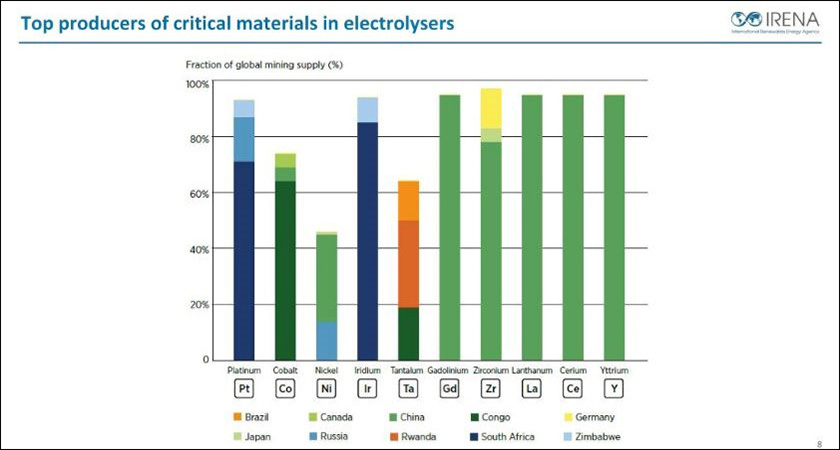
New rules, standards, and management of hydrogen production and trade could lead to geopolitical competition, and could also open a new era of improving international cooperation, IRENA points out.
Geopolitical competition or promotion of international cooperation
“Assisting particularly developing countries to deploy green hydrogen technologies and advance hydrogen industries could prevent the widening of a global decarbonization divide and promote equity and inclusion, creating local value chains, green industries, and jobs in renewable-rich countries.” the report said.
The document called ‘Geopolitics of Energy Transformation: The Hydrogen Factor’ is part of a broader view of the impact of energy transformation carried out by the international agency.