







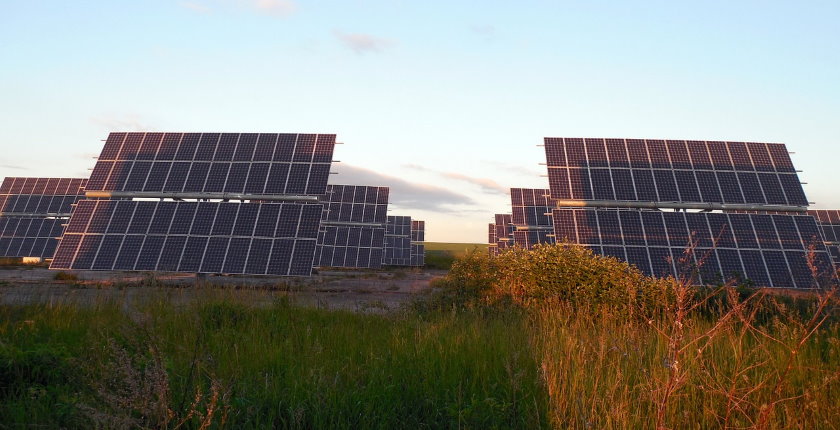
Succo from Pixabay


The European Union’s regulatory branch agreed with the establishment of a firm for the Asopia solar power project in Greece. Masdar, Taaleri, Constantakopoulos and Autohellas are jointly developing the 65 MW photovoltaic facility in Boeotia.
The European Commission has approved the creation of a joint venture based in Greece by Abu Dhabi Future Energy Company PJSC (Masdar) of United Arab Emirates, Taaleri Energia of Finland, Kyoto SA and Autohellas Tourist and Trading, both of Greece. The firm will be active in the development, financing, construction, operation and maintenance of the Asopia solar power plant project.
The decision was made under the European Union’s Merger Regulation. Masdar-Taaleri Generation or MTG is the two companies’ joint venture for Central and Eastern Europe, registered in Serbia. In May they said it would develop the solar power plant with Greek partners Constantakopoulos and Autohellas.
No competition concerns
Asopia, located in Boeotia (also known as Beotia or Viotia) near Athens, is planned to have 65 MW in capacity. Kyoto is Constantakopoulos Group’s real estate and energy arm. Autohellas is active in the markets of car rental, import and trade.
Masdar is officially called Abu Dhabi Future Energy Co. It is wholly owned by Mubadala Investment Co., which is in turn controlled by the UAE’s Emirate of Abu Dhabi. Masdar advances solutions in energy, water, urban development and clean technologies.
The European Commission concluded that the proposed acquisition would raise no competition concerns and said the greenfield joint venture is expected to have limited activities within the European Economic Area.
MTG’s expansion in Greece
Masdar and Taaleri are working on the project separately from the cooperation deal with PPC Renewables, a subsidiary of government-owned Public Power Co. which is tasked with the country’s energy transition activities. Greece vowed to stop using coal by 2025 and replace lignite plants with renewables – mostly photovoltaics.
PPC Renewables inked cooperation agreements in the sector with a string of domestic and foreign companies.



Be the first one to comment on this article.