

The European Commission has approved Italy’s EUR 1.7 billion state aid mechanism for supporting agrivoltaic installations. The measure, under the Recovery and Resilience Facility, is part of the country’s strategy to reduce greenhouse gas emissions and increase its renewable energy share.
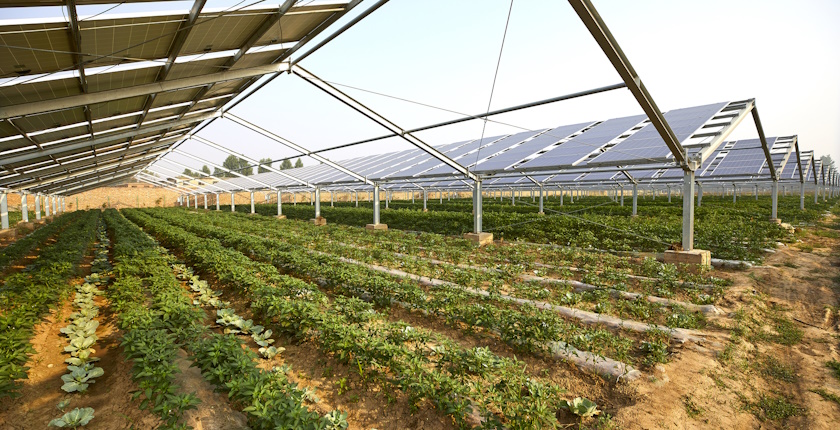
Agrivoltaic or agrisolar systems combine solar panel installations and agricultural activities in an optimal way. Italy’s National Recovery and Resilience Plan has been approved by the commission and adopted by the Council of the European Union.
The Italian scheme will last until the end of 2024, for projects that become operational before mid-2026. The measures will support the construction and installation of 1.04 GW in agrivoltaic capacity to generate a minimum of 1.3 TWh per year.
Agricultural producers will receive aid in the form of investment grants and incentive tariffs
According to European Commissioner for Justice Didier Reynders, who is in charge of competition policy, the EUR 1.7 billion mechanism, partially funded by the Recovery and Resilience Facility, will promote the efficient use of land by combining agriculture and renewable energy production.
The Italian scheme will contribute to the greening of the agricultural sector and the transition to climate neutrality, in line with the EU Green Deal objectives, said Reynders.
Agricultural producers will receive aid in the form of investment grants and incentive tariffs. Investment grants amounting to EUR 1.1 billion will cover up to 40% of eligible investment costs, while incentive tariffs, with an estimated budget of €560 million, will be paid on a pay-as-bid rule during the operation of the facilities for 20 years.
The incentive tariffs will be in the form of two-way contracts for difference (CfDs), covering the gap between the incentive tariffs and energy prices. A claw-back mechanism will be implemented to pay back any amount exceeding the incentive tariffs in case of high energy prices.
Beneficiaries will be obligated to build vertical mounting structures for the installations or use high-efficiency solar power modules.
BayWa r.e. clinches EU grants for agrivoltaic projects
Companies investing in agrisolar are also eligible for support from central EU funds. BayWa r.e., based in Germany, won EUR 6.5 million in funding from the EU’s LIFE Programme for six projects by 2027.
Planned investments in France, Spain and the Netherlands are intended for agri-PV technology to supplement fruit farming on a larger scale. Three more projects in Germany, Spain, and Italy are for agri-PV alongside crops like summer and winter wheat or soya.
They will provide data to refine future investments, with the aim of making them commercially viable, the company pointed out.
LIFE is the EU’s funding instrument for the environment and climate action. It co-funds projects that support policies like the Farm-to-Fork Strategy, which promotes a sustainable food system.