





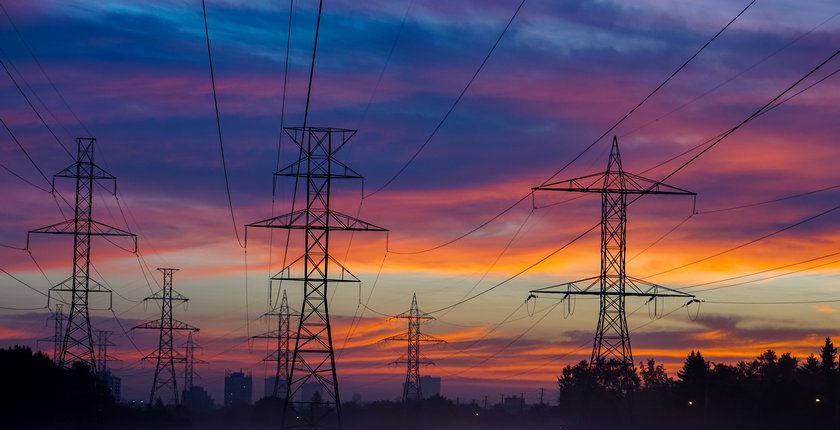
Photo: norqin from Pixabay


With less than three months remaining until the European Union’s Carbon Border Adjustment Mechanism (CBAM) is fully implemented, none of the Energy Community’s contracting parties has yet qualified for an exemption in the electricity segment, according to the 2025 CBAM Readiness Tracker. However, the Energy Community’s report suggests that efforts to meet the are gaining momentum, with Serbia, Moldova, North Macedonia, and Montenegro leading the way to market coupling with the EU, and almost all contracting parties planning to introduce carbon pricing.
These efforts signal a growing readiness across the Energy Community to turn CBAM into a catalyst for deeper regional energy market integration and decarbonization, according to the annual report.
“The progress reflected in this year’s tracker underlines that CBAM can drive – not deter – regional cooperation on the energy transition,” Energy Community Secretariat Director Artur Lorkowski stressed and added that the scheme should “serve as a bridge into the EU, not a barrier.”
Lorkowski: CBAM should serve as a bridge into the EU
Starting on January 1, 2026, the EU will charge fees on the CO2 emissions of goods imported from countries that don’t apply matching carbon pricing schemes. In addition to electricity, the carbon border tax will cover cement, iron and steel, aluminum, fertilizers, and hydrogen.
Serbia faces the highest exposure to CBAM costs
Estimates based on 2024 data show the CBAM exposure of EU electricity importers could reach around EUR 1.17 billion a year. Serbia accounts for the largest share, with an estimated EUR 612.5 million in annual CBAM costs, followed by North Macedonia, with about EUR 200 million, Montenegro, EUR 190 million, and Bosnia and Herzegovina, EUR 158 million. Moldova’s exposure is about EUR 6 million, while Albania, which has an electricity mix almost entirely dominated by renewables, faces no CBAM-related costs, according to the report.
The estimated average CBAM cost per megawatt-hour is EUR 33.14 for Moldova, EUR 59.71 for North Macedonia, EUR 62.45 for Montenegro, EUR 66.71 for Serbia, and EUR 73.37 for Bosnia and Herzegovina.
The criteria for a CBAM exemption for electricity include integrating the power market with the EU and introducing a carbon pricing system. A contracting party must also adopt EU regulations on energy, electricity, environment, and competition, increase the share of renewables in its energy mix to align with the EU’s 2030 targets, commit to climate neutrality by 2050 and submit a related roadmap to the EU, and implement measures to prevent indirect electricity imports from non-compliant countries.
Advances evident in emissions, renewables, and market coupling
The 2025 CBAM Readiness Tracker shows that last year alone, carbon intensity across the contracting parties’ power sectors fell by an average of 11%. At the same time, capacity from renewables, excluding large hydro, surged to 5.1 GW from 2 GW between 2020 and 2024. The expansion was driven almost entirely by solar and wind, helped by renewable energy auctions.
When it comes to electricity market integration, no contracting party has completed market coupling with the EU. However, Serbia, Moldova, North Macedonia, and Montenegro are approaching a “point of no return,” which represents a full transposition of EU regulations relevant for market coupling, according to the tracker.
The energy transition unfolding across the Energy Community contracting parties is both tangible and measurable, Adam Cwetsch, Head of the Green Deal Unit at the Energy Community Secretariat, told Balkan Green Energy News. “Carbon intensity in electricity production and economic output continues to fall, while renewable energy deployment accelerates through competitive auctions. This progress reflects a clear commitment to European decarbonisation goals and lays the foundation for deeper energy market integration and long-term climate neutrality,” he stressed.
The secretariat remains committed to ensuring the process continues smoothly – without obstacles from possible unintended impacts of CBAM, Cwetsch said.
Even though no contracting party has introduced a carbon pricing instrument for electricity, almost all of them have outlined plans to establish domestic systems that reflect their specific circumstances.
“This is a crucial step toward alignment with the EU’s carbon pricing framework under CBAM. The rollout of monitoring, reporting, and verification systems across the region is laying the groundwork for implementation and demonstrates growing readiness and credibility, even as timelines remain tight and challenges persist,” Cwetsch stated.
Available carbon pricing models are carbon taxes, ETS and a combination of the two
The available models are a carbon tax, an emissions trading system (ETS), and a hybrid version. The only contracting party that has no plans to introduce carbon pricing is Kosovo*, according to the report.
All contracting parties have concluded agreements to apply EU law in the fields of energy, electricity (including renewable energy), the environment, and competition. In each of them, the implementation of renewable energy legislation is either underway or showing visible progress, the report shows.
No Western Balkan country has included the EU’s 2050 climate goals into national legislation
On the other hand, Ukraine and Moldova are the only ones that have included the 2050 climate neutrality objective in national legislation, while no contracting party has submitted a corresponding roadmap to the EU.
Another requirement that no one has yet fulfilled is the establishment of an effective system to prevent indirect import of electricity into the EU from other third countries or territories that do not meet the CBAM exemption criteria for electricity.
The CBAM mechanism is a failed mechanism that has harmed the interests of the European people and dampened new energy investment in non-EU areas. Only Serbia has seen a decrease in electricity prices, but it is unclear whether actual electricity users will receive any tangible benefits.