

Energy Crisis

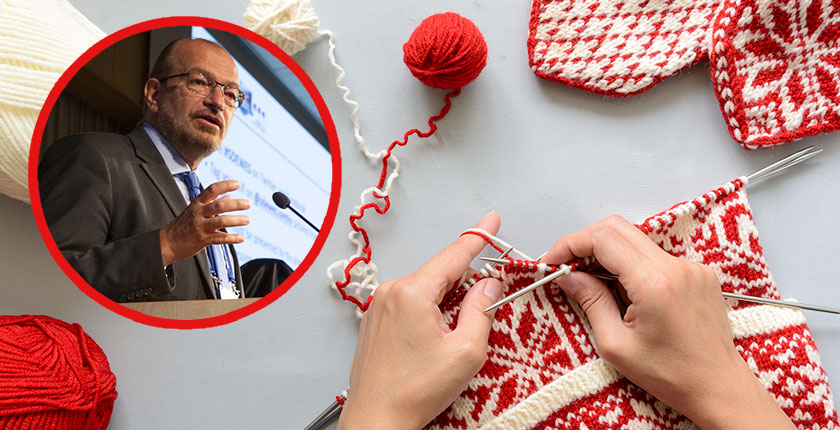
Duić: We need to prepare warm sweaters for winter

Foto: Balkan Green Energy News

Published

July 26, 2022

Country

Comments

comments icon

0

Share

Published:

July 26, 2022

Country:

Comments:

comments icon

0

Share

Neven Duić, a full professor at the Faculty of Mechanical Engineering and Naval Architecture of the University of Zagreb, said the upcoming winter in Croatia could be slightly colder than before.

“We should consider saving gas, buying warm sweaters, pullovers, because we might have to keep warm at a lower temperature,” Duić told national broadcaster Hrvatska radiotelevizija (HRT) in a comment on rising energy prices. While 25 degrees Celsius is a typical heating temperature in Croatia, the standard in the West is 20 degrees, he pointed out and noted there are discussions to lower the level to 19 degrees. “If we cut by two degrees Celsius in Croatia, it would still be a warm 23 degrees Celsius,” he added.

Asked if Croatia has enough domestic energy sources, Kristina Čelić, director of the Energy Administration in the Ministry of Economy and Sustainable Development, said the country has a good infrastructure for getting energy to Croatia. In her view, it means the security of supply would be strong even in case of disruption.

She noted that Croatia produces a part of the gas it consumes.

Comments (0)

Be the first one to comment on this article.

Enter Your Comment
Please wait... Please fill in the required fields. There seems to be an error, please refresh the page and try again. Your comment has been sent.

Related Articles

Bulgaria host renewable electricity plants on Luxembourg s behalf

Bulgaria to host renewable electricity plants on Luxembourg’s behalf

16 January 2026 - Bulgaria joined Finland as a host country for renewables projects funded by Luxembourg, under the RENEWFM program for 2026

Renewables account 99 Turkey net electricity capacity additions

Renewables account for 99% of Turkey’s net electricity capacity additions

16 January 2026 - Electricity capacity in Turkey reached 122 GW in 2025, of which 62% was from renewables, according to the SHURA Energy Transition Center

Young Energy Ambassadors; EU Commission website, 2025

From bystanders to partners: How to ensure the new Citizens Energy Package effectively engages EU citizens in a clean energy future?

16 January 2026 - EUSEW Young Energy Ambassadors explore how energy communities and community-benefit clauses can help citizens fairly join Europe’s clean energy transition.

eu cbam 2026 go live commission data electricity

CBAM go-live: no electricity imports in week one

16 January 2026 - Iron and steel dominated the CBAM imports declared in the first reporting window, January 1-6, according to the European Commission