






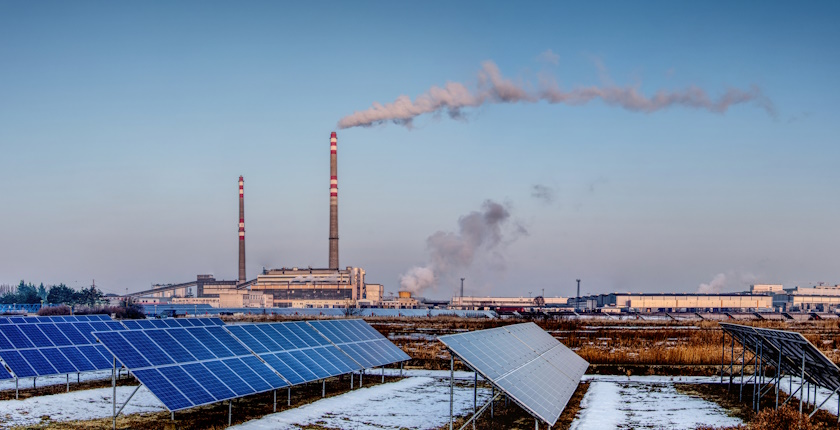
Photo: iStock


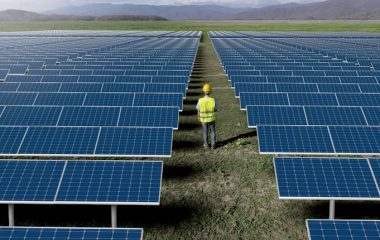
Government-controlled Kosovo Energy Corp. (KEK) said it is preparing to start building its Solar4Kosovo 1 photovoltaic plant near Prishtina. It informed the local community that agricultural and other activities weren’t allowed anymore on the designated land.
After four years of planning. a former coal ash dump is about to be turned into the biggest solar power plant in Kosovo*. KEK is running the Solar4Kosovo 1 project at a site near its Kosovo A power plant near Prishtina.
The area is in the municipalities of Obiliq (Obilić) and Fushë Kosovë (Kosovo Polje). The government-owned power utility said it is preparing to begin construction works. The project is for 100 MW in connection capacity, translating to 120 MW in peak capacity.
The update mainly affects residents of Dardhishtë and Mërlak in Kryshevc (Kruševac) in Obiliq municipality. Agricultural and other activities aren’t allowed anymore, the company announced. It explained that so far it tolerated the use of its property there by the local community.
KEK obtained EUR 32 million EU grant
The financing for the Solar4Kosovo facility is part of the European Union’s Economic and Investment Plan for the Western Balkans of EUR 9 billion in grants. The package is aimed at mobilizing a total of EUR 30 billion.
The European Investment Bank is providing a EUR 33 million loan. The EU has approved a EUR 32 million grant via its Western Balkans Investment Framework (WBIF), while Germany’s KfW Development Bank is lending EUR 29 million to KEK. The investment was earlier estimated at EUR 107 million overall.
Annual output estimated at 169 GWh
The proposed solar power plant is expected to produce 169 GWh per year. It would have an underground connection to the existing substation at the Kosovo A thermal power plant.
Notably, Kosovo* is dependent on the obsolete Kosovo A and Kosovo B coal plants for almost all its electricity.
The other part of the Solar4Kosovo project is for a solar thermal facility of 30 MW for the capital city’s district heating system. The site is in the village of Shkabaj (Orlović) in Obiliq municipality. Another segment of the investment is for a further network extension of 20 MW with supply from Kosovo B.
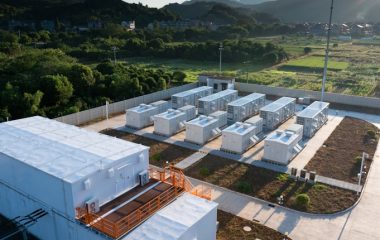
The other Solar4Kosovo2, the solar thermal facility for the capital city’s district heating system includes a 50 MW network extension (not 20)