

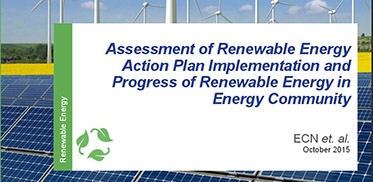
The Energy Community Secretariat published a study on progress in renewable energy in 2013 and 2014 and assessment of renewable energy action plans. Three contracting parties (Bosnia and Herzegovina, Former Yugoslav Republic of Macedonia and Albania) have not adopted an action plan yet. The analysis identified inconsistencies in the data reported with official energy statistics, mostly related to biomass consumption in some contracting parties. A revision of energy statistics based on energy consumption surveys is needed, the organization’s press release said. Biofuels sustainability criteria and establishment of certification schemes have not been adopted in any contracting party, the statement said.
The heating and cooling and transport sectors are severely lagging behind. All parties except Montenegro are at least slightly below the trajectory for meeting the 2020 renewable energy targets in 2020, but the lack of progress in Moldova, Serbia and Kosovo* is most critical. In certain countries a revision of the renewable energy policies is urgently needed, the Energy Community said.
Apart from introducing attractive support measures, the legislative framework is still not conducive to investments in renewable energy, which is reflected among others in the improper formulation of power purchase agreements.
The Energy Community Secretariat published a study on progress in renewable energy in 2013 and 2014 and assessment of renewable energy action plans. Three contracting parties (Bosnia and Herzegovina, Former Yugoslav Republic of Macedonia and Albania) have not adopted an action plan yet. The analysis identified inconsistencies in the data reported with official energy statistics, mostly related to biomass consumption in some contracting parties. A revision of energy statistics based on energy consumption surveys is needed, the organization’s press release said. Biofuels sustainability criteria and establishment of certification schemes have not been adopted in any contracting party, the statement said.
The heating and cooling and transport sectors are severely lagging behind. All parties except Montenegro are at least slightly below the trajectory for meeting the 2020 renewable energy targets in 2020, but the lack of progress in Moldova, Serbia and Kosovo* is most critical. In certain countries a revision of the renewable energy policies is urgently needed, the Energy Community said.
Apart from introducing attractive support measures, the legislative framework is still not conducive to investments in renewable energy, which is reflected among others in the improper formulation of power purchase agreements.