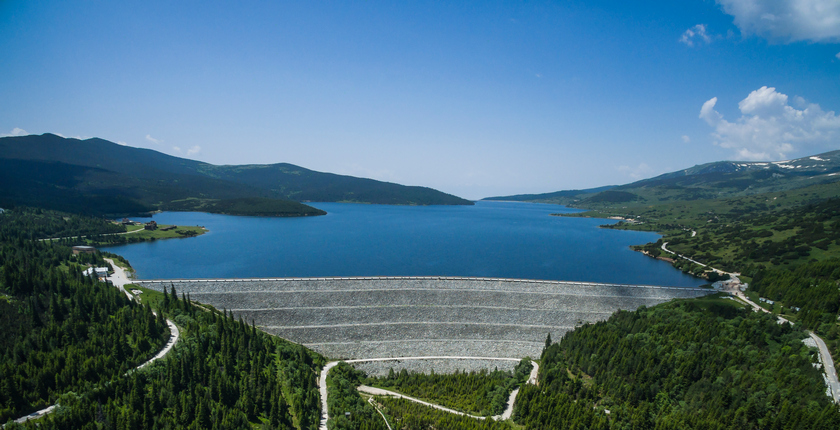



Both entities of Bosnia and Herzegovina urged Croatia to halt the construction of a small hydropower plant at the spring of the Una river. It is part of the Natura 2000 network. The Una is a UNESCO world heritage site and a national park in BiH.
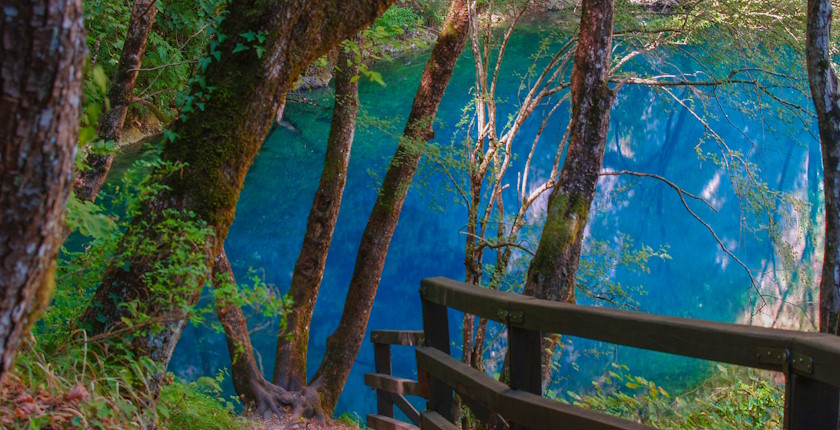
After the authorities in Croatia remained silent, the scandal was internationalized. Both the Republic of Srpska and the Federation of BiH, the two entities that make up neighboring Bosnia and Herzegovina, demanded from them to stop a private investor building a small hydropower plant at the spring of the Una. Almost pristine, it is arguably one of the most beautiful rivers in the Balkans.
Locals, environmentalists and political representatives held three protests since construction began on July 5.
The site in Donja Suvaja in the municipality of Gračac in Croatia is part of the European Union’s Natura 2000 network of protected areas. The United Nations Educational, Scientific and Cultural Organization (UNESCO) has included the river’s upper stream in Bosnia and Herzegovina in the list of world heritage sites. The country declared it a national park.
Before and behind the construction site. Images by Sanja Sevo pic.twitter.com/J2GoKRQYsT
— Ulrich Eichelmann (@UlrichEichelman) July 25, 2024
Drinking water cut off during heatwave
The investor, Pipra, first caused an interruption in water supply, according to the head of the Una association from the nearby town of Srb Tanja Rastović. She told Novosti that the water was subsequently muddied from the works, making it unsafe to drink. The group is collecting signatures for a petition to stop the project.
Moreover, Croatia is planning a nuclear waste disposal facility further downstream from the Una river spring
The local population was cut off in the middle of the latest heat wave for several days. The site of the river spring is just a few kilometers from the Una national park in neighboring BiH.
“Una is indeed world heritage. But it is my heritage as well. My ancestors drank this water. My grandchildren are drinking it and I want that to continue,” local inhabitant Sanja Ševo stressed.
✊ Već viđeno: Opšta šteta, privatni profit! Ne damo Unu! #una #fondacijaact
? Fondacija ACT pridružila se današnjem protestu protiv izgradnje mHE na Vrelu Une. Isti je održan u Donjoj Suvaji (Hrvatska), na samoj lokaciji gdje je investitor započeo izgradnju predmetne mHE. ⤵️ pic.twitter.com/7pUdWNFfU8
— Fondacija za društvene promjene – ACT (@FondacijaA) July 25, 2024
No construction permit
The firm lack a number of authorizations such as the assessment on the acceptability on an intervention in an environmental network area and even a valid construction permit, as it expired in 2022, according to environmentalist organization Zelena akcija – Friends of the Earth Croatia.
The spring of the Una river is at least 248 meters deep, making it one of the deepest in the world.
Of note, Croatia is planning a nuclear waste disposal facility further downstream. It scheduled the construction start date for 2028. The local population wasn’t consulted at all.