







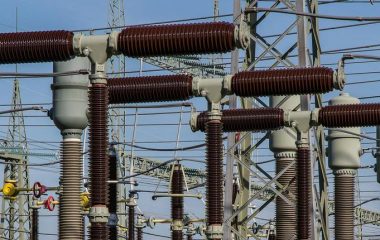
Photo: Energy Community Secretariat


In the first quarter of this year, electricity flows between the European Union and the Western Balkans diverged from historic trading patterns, according to the first Energy Community Secretariat report on the impact of the Carbon Border Adjustment Mechanism (CBAM) on electricity markets. The change was driven by two key developments: commercially scheduled cross-border exchanges with EU member states declined by 25%, and the day-ahead electricity price gap between the EU and the contracting parties was two to three times greater than in the same period in 2025.
The Energy Community Secretariat intends to publish updates of this report at a quarterly frequency. The Carbon Border Adjustment Mechanism (CBAM) entered into force on January 1.
The analysis focuses on the six Western Balkans (WB6) contracting parties – Albania, Bosnia and Herzegovina, Kosovo*, Montenegro, North Macedonia, and Serbia, and their neighbouring EU member states – Bulgaria, Croatia, Greece, Hungary, Italy, and Romania.
The flows from the WB6 to the EU declined by 8.1%
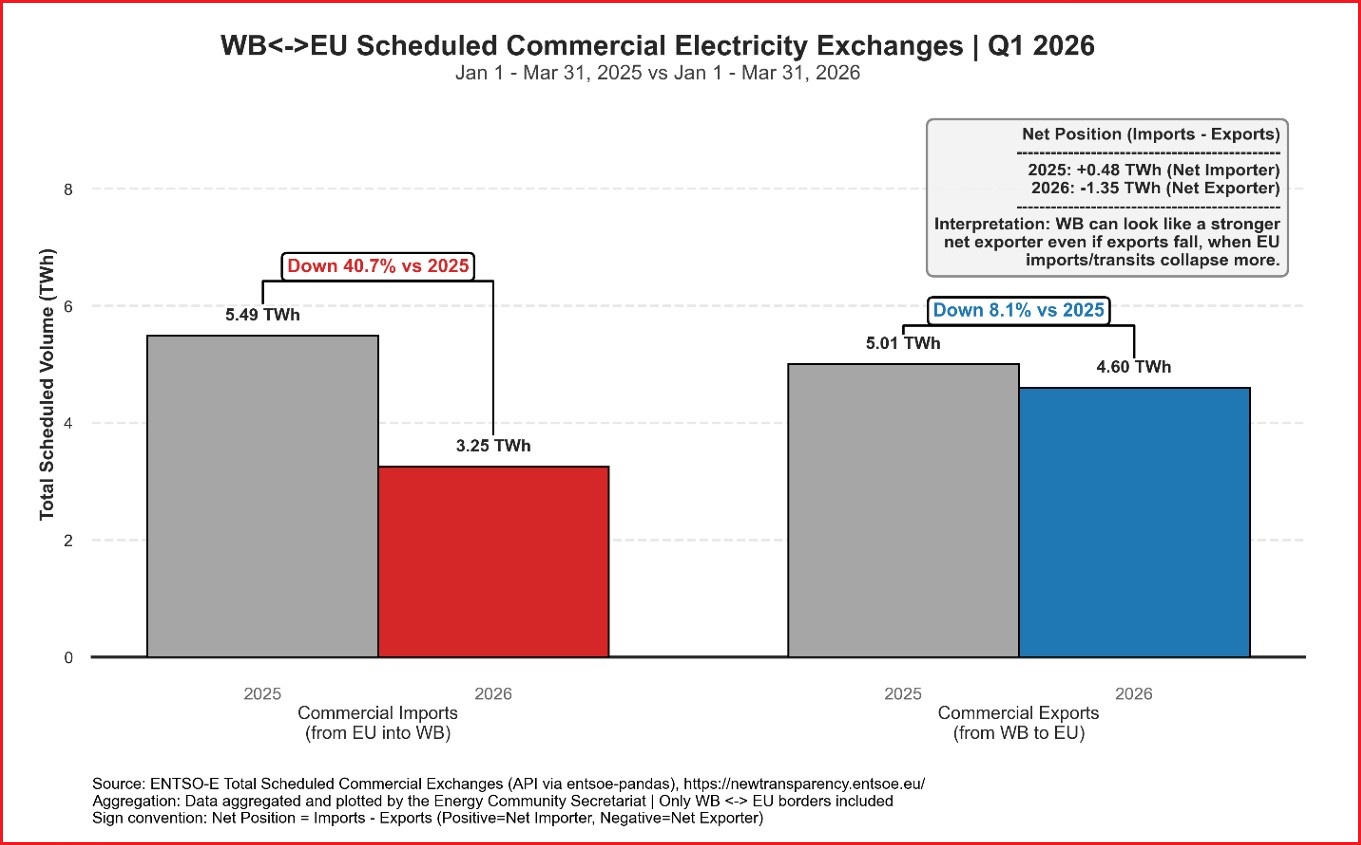
According to the report, scheduled commercial exchanges that include both genuine domestic export and transit flows between the WB6 and the EU decreased significantly in Q1 2026 versus Q1 2025.
The flows from the WB6 to the EU declined by 8.1%, from 5.01 TWh to 4.60 TWh, while from the EU to the WB6 they fell by 40.7%, from 5.49 TWh to 3.25 TWh.
“This shift was driven overwhelmingly by the reduction of EU-to-Western Balkans flows, not by an increase in Western Balkans exports. The total volume of electricity traded commercially across the EU–WB6 border contracted by roughly 25% in Q1 2026 compared to the same quarter last year, which points to reduced utilization of interconnection capacity and less cross-border exchange,” the report reads.
The quarter was also characterized by an extraordinarily high, carbon-free, generation of electricity in hydropower plants in WB6. As a result, day-ahead electricity prices in WB6 on average were EUR 30 per MWh lower than in neighbouring EU markets except Greece, or 2 to 3 times higher than in the same period of 2025.
Despite the widening spread, the potential to fully arbitrage price difference in imports from the WB6 except Albania to the EU dropped due to CBAM-related costs, suggesting that higher-priced EU markets including Italy, Romania, Bulgaria and Croatia have not been able to fully benefit from lower-cost electricity available in neighbouring WB6 systems, the report underscores.
Secretariat: These developments highlight potential emerging market distortions
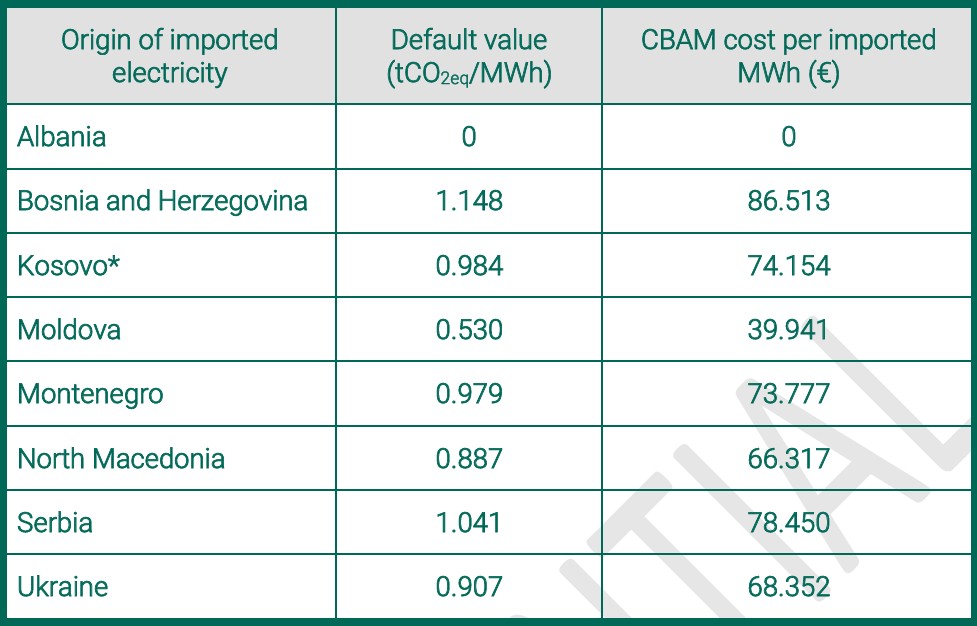
The secretariat stressed that under CBAM, renewable electricity exports are treated in the same way as fossil-based generation through the use of default emission factors.
This appears to have directly affected trade flows: while hydropower exports from Albania—where the default emission factor is zero—continued, similar exports from other markets, such as Montenegro, largely didn’t, in its view.
Taken together, these developments highlight potential emerging market distortions that may affect both sides of the market: preventing higher-price EU markets from accessing lower-cost electricity, while constraining exports from contracting parties, and undermining the market integration imperative, the secretariat pointed out.
However, ongoing negotiations on the CBAM amendments aim to partially address some of the underlying causes of these distortions.
The secretariat noted that the first data establish a baseline, but that a single quarter, especially one shaped by exceptional hydro conditions, isn’t sufficient to draw firm conclusions about lasting structural effects of CBAM implementation.
A risk for operational security in Southeast Europe
The report also outlines an increasing divergence between commercially scheduled cross-border exchanges and actual physical electricity flows during the first quarter of 2026.
This is showcased via significantly increased scheduled exports from Albania to Greece, which weren’t followed by a proportional increase in physical flows on that route.
Instead, electricity continued to flow according to the physical characteristics of the transmission network, for instance from Albania towards Montenegro and BiH, and further onward to EU border countries such as Croatia, Hungary, and Romania.
This divergence reduces the predictability of cross-border flows for transmission system operators (TSOs) and increases the risk of unscheduled or loop flows, the report reads.
This poses a risk for operational security in Southeast Europe and increased costs of system operation, ultimately leading to higher network tariffs in both contracting parties and neighbouring EU member states, according to the report.


Be the first one to comment on this article.