






Photo: iStock


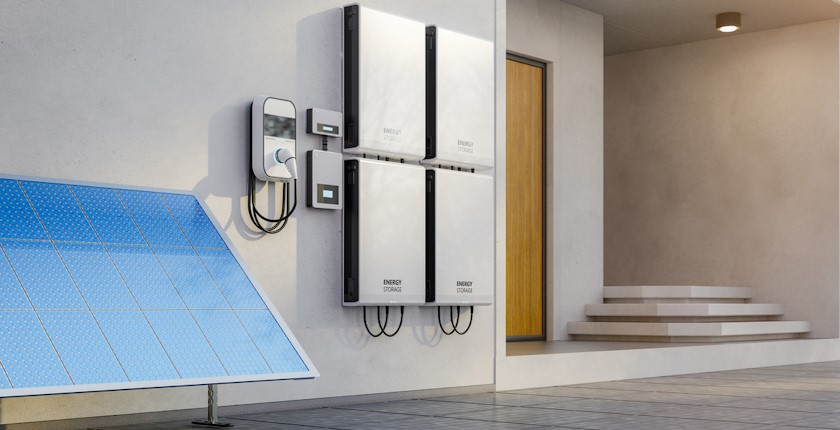
The Association of Prosumers and Energy Communities in Romania claims that prosumers have more than 800 MW in overall operating battery capability. It compares to some 600 MW in battery energy storage systems that energy companies installed as standalone or colocated facilities.
Prosumers have been the main pillar of solar power deployment and the entire energy transition in Romania for a long time. While commercial plants have taken the lead, households, institutions and small firms apparently have more battery power than the mainstream part of the sector.
Vice-President of Romanian Energy Regulatory Authority (ANRE) Gabriel Andronache recently said there was 593 MW of capability in dispatchable – controllable, flexible – battery energy storage systems, or BESS. They are either individual facilities or integrated with wind or solar power plants.
Andronache estimated that, at the same time, 66,000 prosumers had batteries. Their combined capability probably exceeds 600 MW, the official added. Notably, he said dispatchable energy storage is expected to top 2 GW this year.
Not all prosumers inform regulatory body of new or upgraded batteries
ANRE doesn’t have the exact figures, according to the Association of Prosumers and Energy Communities (APCE). Not all prosumers that install batteries or upgrade their systems report it to distribution operators, it claimed.
The group estimated that total battery storage is above 800 MW. “And this is just the beginning. Romanians will not reduce their appetite for investments in energy autonomy,” its President Dan Pîrsan wrote in the reaction to Andronache’s statement.
APCE’s Pîrsan: We scare energy companies
The 600 MW in dispatchable battery power “is a joke,” APCE stressed and compared it to the deficit of 2 GW to 4 GW during intraday power demand peaks. It also highlighted the fact that half of operating BESS capability belongs to a single private operator.
“Prosumers are no longer a marginal phenomenon. They are becoming a distributed energy infrastructure, capable of influencing the balance of the system. This is exactly what scares energy companies,” Pîrsan underscored, pointing to profits of producers, suppliers and distributors.
According to APCE, the Romanian energy market is currently characterized by major turbulences, extreme price volatility, legislative uncertainty and insufficient and expensive energy.
The association cited turbulences and price volatility in Romania, though it is one of the most developed battery markets in Southeastern Europe
On the other hand, Romania is in the top tier in the BESS segment, per Aurora’s latest report. Looking at the region that Balkan Green Energy News tracks, it trails only Bulgaria in installed battery power. Nevertheless, the optimal energy storage level is a long way to go, especially in light of the country’s solar boom and the rejuvenation in wind power.
The mismatch between the peaks of PV production and power demand exerts an increasing downward pressure on market prices.
The Romanian Photovoltaic Industry Association (RPIA) has estimated that total solar power capacity grew to more than 7 GW last year. Before the end of the year, SolarPower Europe forecasted that the level, in peak terms, would hit 7.6 GW or 2.5 GW more than at the end of 2024.


Be the first one to comment on this article.