





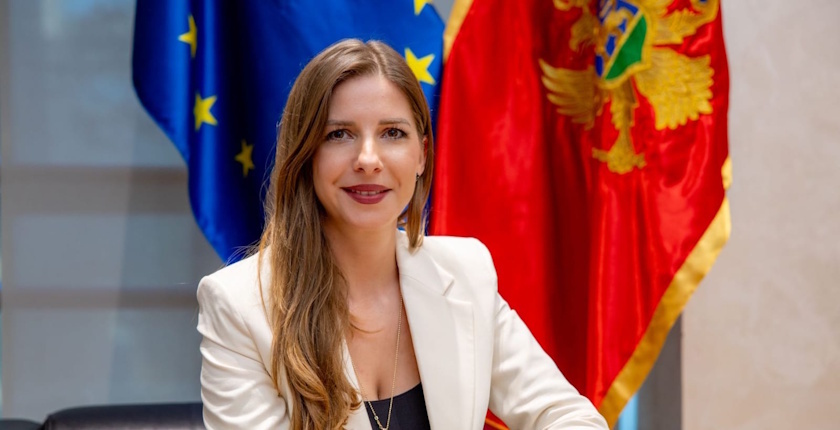
Zorana Sekulić


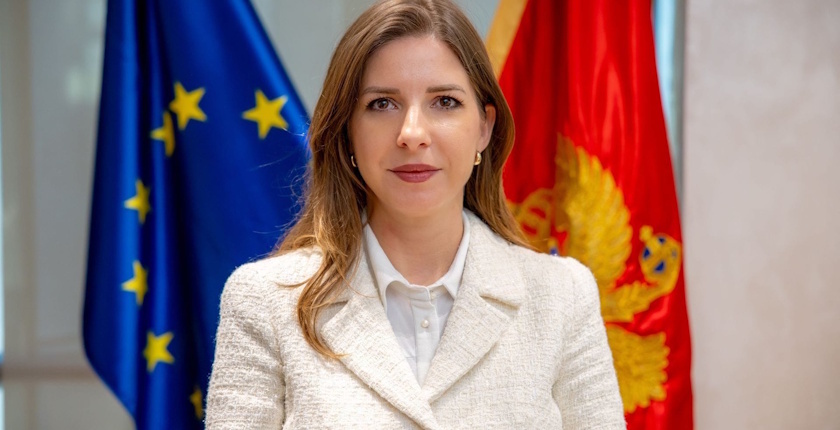
By adopting a program for the development of green hydrogen with an action plan for the period 2026-2028, Montenegro aims to prepare for a future in which hydrogen will be an integral part of energy and economic systems, Zorana Sekulić, Director of the Directorate for Oil and Gas at the Ministry of Energy and Mining, said in an interview with Balkan Green Energy News.
Montenegro adopted the program for the development of green hydrogen with an action plan for the period 2026-2028 in late 2025.
Zorana Sekulić graduated from the Faculty of Metallurgy and Technology at the University of Montenegro, where she also completed specialist and master’s studies in electrochemistry. She is currently finishing her doctoral studies in hydrogen energy and advanced materials for hydrogen storage.
Why hydrogen?
Because it represents a fusion of science and practical application, addressing one of today’s greatest challenges – how to provide clean yet stable energy. Through my doctoral research, I have had the opportunity to understand its full potential, not just as a fuel, but as an energy carrier that can enable decarbonization and greater security for the energy system.
For Montenegro, hydrogen is not just a technology of the future but also an opportunity to lay the groundwork on time for a sustainable and competitive energy sector. The opportunity to contribute to that endeavour was my key motivation.
Where does Montenegro plan to use hydrogen?
At this moment, Montenegro does not see hydrogen as a solution for mass and immediate application, but as a strategic energy resource for the medium and long term, with phased and targeted development. The program identifies sectors where hydrogen can provide the highest added value, primarily where decarbonization is the most demanding or where simple alternatives do not exist.
The program recognizes the potential for hydrogen’s application in transportation and shipping
The program recognizes the potential for hydrogen application in transportation, especially in road and maritime transportation and public transit, where decarbonization is particularly challenging. A significant role for hydrogen is also seen in the energy sector, mainly for balancing the power system with an increasing share of renewable energy sources.
In the long term, its role in energy storage and possible integration into gas infrastructure is also being considered. Although industrial application in Montenegro is currently limited, the program leaves room for its use in process-intensive activities as new industrial capacities and technologies develop.
When do you expect hydrogen to start being used in Montenegro?
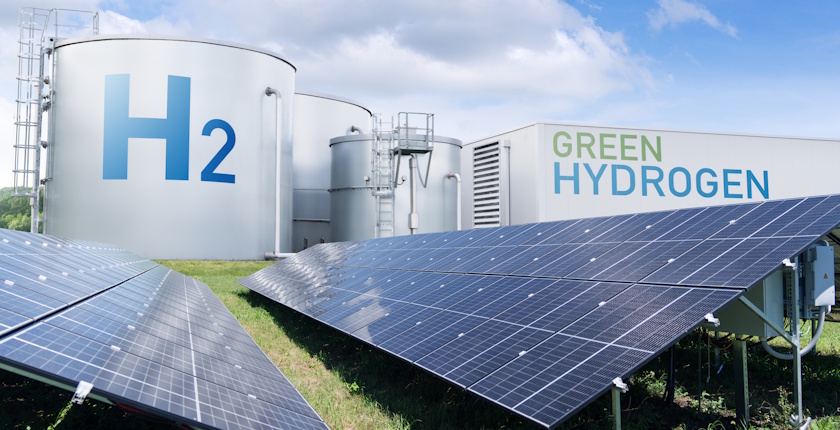
The first concrete activities related to hydrogen are expected as early as the implementation period of the 2026–2028 action plan. It will include the development of a regulatory and institutional framework, the introduction of educational programs, and the strengthening of regional cooperation, followed by pilot and demonstration projects.
Wider commercial applications of hydrogen will be driven by technological progress, cost optimization, the availability of renewable energy, and infrastructure development. However, the program lays the foundation for Montenegro to enter this process on time and utilize its comparative advantages.
So, Montenegro wants to be ready when all those conditions are met?
Exactly. Our goal is for Montenegro to be ready to integrate hydrogen into its energy system once the technology becomes more commercially available and profitable.
The program for the development of green hydrogen allows us to establish a regulatory framework, develop know-how, and launch the first projects in time, so we are ready to seize this opportunity when market and technological conditions are fully developed.
When could pilot and demonstration projects begin?
The action plan is primarily focused on establishing the regulatory and institutional framework, but we will put extra effort into launching the first pilot and demonstration projects during the initial 2026–2028 period, in cooperation with international partners and interested investors.
We believe it is important to gain practical experience through small-scale projects as early as possible and test the possibilities of hydrogen application in Montenegro. Such an approach allows for a phased and responsible preparation for a broader use of hydrogen in the next phases of the energy transition.
Who are the authors of the program and action plan?
The drafting of the program received strong technical and methodological support from GIZ, which gathered a team of remarkable local and regional experts from the University of Montenegro, the Vinča Institute of Nuclear Sciences, as well as representatives from business, the non-governmental sector, and Montenegro’s Chamber of Economy.
This inclusive and multidisciplinary approach significantly contributed to the quality of the program, ensuring its expert-based foundation and clearly defined guidelines for the further development of the green hydrogen sector in Montenegro.
One of the four goals of the program refers to the development of science, innovation, and education. Does Montenegro already have educational institutions dealing with hydrogen?
Of course. The University of Montenegro, particularly the Faculty of Metallurgy and Technology and the Faculty of Maritime Studies in Kotor, are already implementing significant research and development projects in the field of hydrogen technologies, hydrogen storage, alternative fuels, and the energy transition. Both provide a solid basis for further educational advancement and the practical application of research results.
How does Montenegro plan to engage in regional and European initiatives to develop hydrogen infrastructure?
The program recognizes that Montenegro, as a small market, cannot independently develop all segments of the hydrogen economy. So, progress could be achieved through regional connectivity, participation in international initiatives, and cooperation with European and global partners. That is why one of the key priorities is a timely positioning of Montenegro within regional and European initiatives that will include hydrogen in the future.
In this context, Montenegro’s participation in the H2 IAP – Adriatic-Ionian Pipeline project is particularly significant. This represents key infrastructure for the future gasification of the country, as well as a potential link to the regional and European hydrogen network.
The development of such projects allows Montenegro to become part of the broader European energy architecture and creates the preconditions for integrating hydrogen as an important energy source in the coming phases of the energy transition.
What is the current status of that project?
The IAP project, including its future role in hydrogen transport, is in the phase of further project documentation development and regional coordination among participating states.
Current activities involve conducting technical analyses and reviewing options for designing the pipeline to be compatible with hydrogen transportation, in line with the latest European standards.
IAP is also viewed as a long-term strategic link to the future European hydrogen network
Work is underway to include the project in the Ten-Year Network Development Plan of the European Network of Transmission System Operators for Gas (ENTSOG TYNDP), as well as to obtain a project of mutual interest (PMI) status from the European Commission, which would further validate its strategic importance at the European level.
IAP is not viewed only as a project for natural gas supply but also as a long-term strategic link to the future European hydrogen network, including initiatives like the European Hydrogen Backbone. This project has the potential to further strengthen energy security and open new opportunities for the development of the hydrogen economy in the region.
The Ministry has also prepared a strategic environmental impact assessment report for the program. Is there a risk that the production and use of hydrogen could negatively affect the environment?
According to the EIA report, there is no inherent risk that the production and use of green hydrogen will negatively impact the environment, provided that activities are carried out in line with applicable regulations, technical standards, and protection measures.
The assessment affirms that the development of green hydrogen has a predominantly positive impact, particularly in reducing greenhouse gas emissions, improving air quality, and strengthening the energy transition toward renewable sources.
Possible negative impacts have been identified mainly in the infrastructure construction phases and include local, temporary, and manageable effects, such as land use, water consumption, or increased traffic activity.
Where do you see the biggest obstacles to the use of hydrogen in Europe and around the world?
The biggest obstacles, globally as well as in Europe and Montenegro, are largely shared, but their intensity varies depending on the degree of market and infrastructure development.
At the global level, key challenges remain the high costs of green hydrogen production, limited availability of cheap renewable electricity, and underdeveloped infrastructure for transportation, storage, and distribution.
Competition for renewable energy sources poses an additional challenge
Additionally, hydrogen markets are still in early development stages, and regulatory and investment frameworks in many countries are not stable enough to encourage long-term investment.
In Europe, despite a strong political framework and ambitious goals, obstacles include uneven development among member states, the need for faster infrastructure development, and challenges in integrating hydrogen into existing energy systems.
Also, competition for renewable energy sources, which are the basis for green hydrogen production, represents an additional challenge.
And in Montenegro?
The obstacles primarily include an underdeveloped market, limited industrial capacities, and a lack of gas infrastructure. There is also a need for further strengthening institutional and administrative capacities, as well as developing knowledge and skills.
For these reasons, Montenegro’s program and action plan take a phased approach, focused on creating the necessary preconditions so that obstacles can be gradually overcome and the country can be ready for a future broader hydrogen application.
At the same time, it is important to point out that Montenegro possesses significant potential to overcome these challenges, primarily through the active involvement of the scientific and business communities and the strengthening of regional and international cooperation.
International academic cooperation is particularly significant, including the participation of Montenegrin higher education institutions in projects within NATO and EU programs and other multilateral initiatives. All of them help develop advanced technologies, strengthen research capacities, and promote innovation in the field of hydrogen.

Be the first one to comment on this article.