







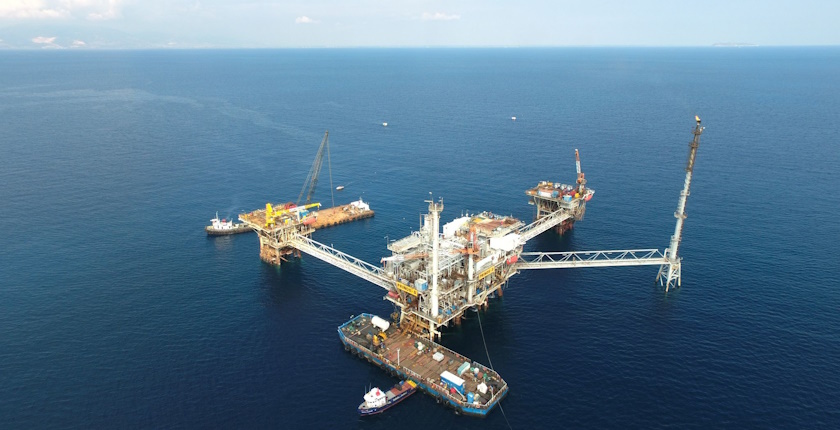
Photo: EnEarth / LinkedIn


EnEarth intends to establish a carbon dioxide storage facility in offshore geological oil reservoirs under the Aegean Sea, near the Greek city of Kavala. It received a positive opinion from the European Commission for the license application, filed a year and a half ago. The project is worth as much as 1.2 billion.
The Directorate-General for Climate Action (DG CLIMA) – the European Commission’s department responsible for climate policy – has given a positive opinion after reviewing plans to store carbon dioxide in the Prinos reservoir, marking a major step for EnEarth’s project.
Technical work that the company submitted meets the European Union’s requirements and demonstrates that the site is suitable for safe, long-term storage, the update reads. The assessment recognises the quality and strength of the geological and technical studies, EnEarth pointed out.
According to the company, the opinion supports its understanding of the oil reservoir’s dynamic behaviour and the systematic monitoring procedures it will put in place. Prinos is under the Aegean Sea, near the Greek city of Kavala. EnEarth is a subsidiary of Energean, which is based in the United Kingdom.
“It confirms what we already know – that Prinos is a safe storage site and a vital player in decarbonising hard-to-abate industry in Europe and Greece, and helping our country meet its goal of reducing emissions by 80 per cent by 2040,” said Managing Director of EnEarth Nikolas Rigas.
Ball is in court of Greece’s licensing authority HEREMA
While the opinion is not legally binding, it represents an important milestone in the permitting process and supports the ongoing review by the Hellenic Hydrocarbon and Energy Resources Management Co. (HEREMA), which will make the final decision on granting the storage permit, the company noted.
EnEarth submitted its permit application to HEREMA in July 2024.
The EU has approved an overall EUR 270 million in funding for Prinos
The investment is estimated at up to EUR 1.2 billion, if the accompanying infrastructure is included. The firm secured EUR 270 million in funding from the European Union. It won EUR 150 million under the Recovery and Resilience Facility and National Recovery and Resilience Plan 2.0, and EUR 120 million under the Connecting Europe Facility.
The European Bank for Reconstruction and Development (EBRD) approved an equity investment in EnEarth last year, worth up to EUR 75 million. It would be the first carbon storage project for the lender, which said at the time that the project is valued at EUR 918 million.
Prinos capacity could reach three million tons per year in phase 2
In phase 1, covered by the application, EnEarth envisages an injection rate of up to one million tons over a 20-year period. It would be bolstered to as high as three million tons per year.
Also of note, the European Union listed the endeavor in Kavala Gulf among its projects of common interest (PCIs).
EnEarth is awaiting the completion of a legal framework for its market test, first with non-binding, and then with binding bids. Then it intends to launch pilot drilling in the summer, while it may make the final investment decision late this year. All in all, the estimated start date is in the first quarter of 2030.
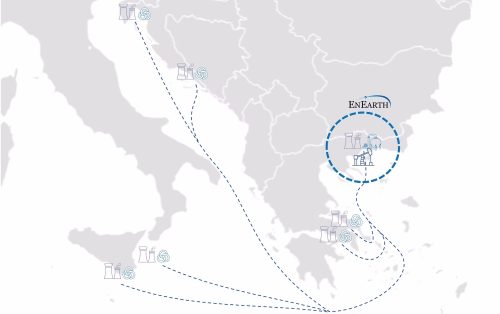
Oil refiners Motor Oil and Hellenic Energy and cement makers Titan and Heracles have the most mature carbon capture projects in Greece. EnEarth said it would offer CO2 storage services to companies in other countries as well, like Bulgaria, Cyprus, Croatia, Italy and Slovenia.
On the other hand, the capacity in Prinos is limited, given the projected emissions and demand.
Greece signed a memorandum of understanding a year ago on carbon capture, utilization and storage (CCUS) with Egypt. The country’s CO2 storage capacity is as high as 580 million tons, per some estimates.


Be the first one to comment on this article.