







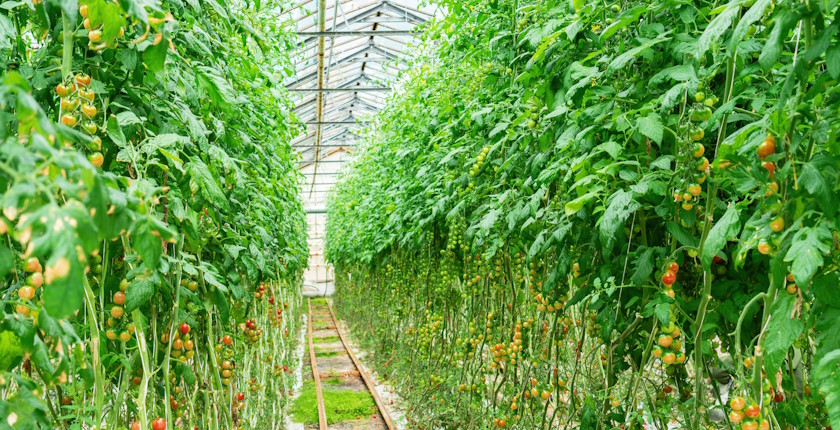
Photo: iStock


One of the largest greenhouse tomato growers in Romania is about to start producing power and heat with two natural gas cogeneration units, of 9.9 MW in combined electricity capacity. The solution includes a system for capturing carbon dioxide, which is required for stimulating photosynthesis. The firm’s owners expect to cut operating costs by up to 50%.
A range of technologies for energy and resource efficiency in the production of fruit and vegetables are becoming increasingly accessible. They include agrisolar plants with batteries and geothermal energy, digitalization platforms, hydroponics, water reuse and high-pressure sodium lights. One of the largest greenhouse tomato growers in Romania opted for combined heat and power (CHP) plants, Profit.ro reported.
CO2 from the combustion of natural gas would be scrubbed and piped back into the greenhouse to boost photosynthesis. Cogeneration systems aren’t new in the greenhouse business, but it is the first time in Romania that such a facility would deliver excess output to the grid.
Silvia and Damian Răileanu’s company Hortihaus produces 1,500 tons of cherry tomatoes per year in the Biled commune in Timiș county, in the country’s far west. The greenhouses span five hectares overall, and this year the surface is expanding by three hectares.
Both CHP units coming online before year-end
The National Energy Regulatory Authority (ANRE) of Romania has just issued the so-called establishment authorization for the first cogeneration unit. It implies that the investor, in this case Silvia Răileanu’s own enterprise, has obtained the necessary financing and is ready to build the facility.
Total investment in the two cogeneration facilities amounts to EUR 4.4 million
Importantly, the permit includes capturing carbon dioxide from the combined heat and power system. The greenhouse gas would be used in – the greenhouses, for stimulating photosynthesis. The project is for 3.2 MW in electricity capacity. It got the technical connection approval (ATR) in 2023, alongside the other proposed unit, of 6.6 MW.
Both are planned for commissioning in the second half of the year, Silvia Răileanu revealed. The investments amount to EUR 2.2 million each, according to her. A cogenerator is EUR 1.5 million, installation costs EUR 400,000 and the connection expenses are EUR 300,000, she said.
Hortihaus consuming six tons of CO2 per day
In tomato production in modern greenhouses, thermal energy, CO2 and electricity costs together make up over 35% of turnover, Răileanu pointed out. Carbon dioxide costs EUR 280 per ton, she said and added that Hortihaus consumes six tons a day.
Own electricity, heat and CO2 will cut operating costs by 40% to 50%, Răileanu claimed.
Of note, surplus heat can be stored in water tanks for later use.




Be the first one to comment on this article.