






Photo: iStock


Aurora Energy Research has launched the Bulgaria Flexible Energy Forecast service to help investors navigate a market that offers numerous opportunities but also contains serious bottlenecks.
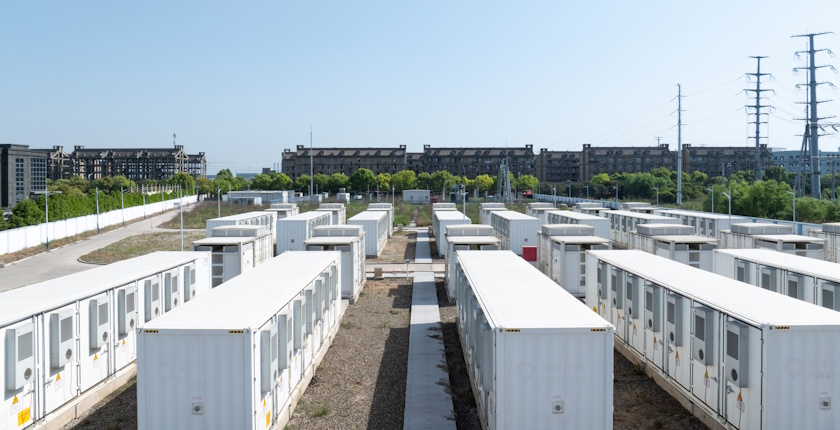
Bulgaria has conducted a series of energy storage auctions since 2024.
For example, in the first round of a program called the National Infrastructure for Storage of Electricity from Renewable Sources (RESTORE), Bulgaria approved EUR 587 million in subsidies for 82 battery energy storage system (BESS) projects, totaling 9.71 GWh.
Recently, Bulgaria’s Ministry of Energy held the second round of auctions, approving EUR 117 million in grants for 31 projects with a total capacity exceeding 4 GWh.
Aurora stressed that the winning projects in the country’s auctions total around 3-4 times the originally announced storage targets, translating to at least 5 GW of supported capacity.
Aurora’s inaugural Romanian Flexible Energy Forecast service was released in April
While this demonstrates the scale of latent investor appetite, it also exposes new challenges such as overbuild, market cannibalization, and delayed project delivery, which are becoming increasingly relevant across South-Eastern Europe, the firm said.
For this reason, Aurora decided to expand its inaugural Romanian Flexible Energy Forecast service, released in April, and other established flexible-energy forecasts for South East Europe, including Greece and Hungary.
Aurora’s analysis suggests that only around 1.8 GW of BESS is likely to be operational by 2026, rising to approximately 3 GW by 2030.
Bulgaria currently lacks the EPC capacity to deliver such a large volume of projects simultaneously, meaning only a fraction of auction-awarded capacity is likely to materialize on expected timelines, according to the firm.
Financing constraints and growing investor concerns around rapid market cannibalization further limit near-term deployment, Aurora added.
The firm has modeled a high-penetration scenario
The firm has modeled a high-penetration scenario in which BESS capacity reaches 4.5 GW by 2030, representing a 50% increase versus the central case.
“In that case, internal rates of return (IRRs) fall by roughly two percentage points for standalone batteries, and 1 point for collocated systems— showing collocated projects remain more robust across different market conditions,” explained Filippos Falieros, Advisory Project Leader at Aurora Energy Research.
This scenario, in his view, also lifts solar capture prices by about EUR 3/MWh, strengthening the economics of hybrid assets.
An attractive investment for early movers
Despite these risks, Aurora’s analysis shows that merchant batteries remain an attractive investment route, particularly for early movers.
Higher wholesale price spreads, elevated balancing market volatility due to limited flexibility, and relatively low competition in the early years are the main drivers in this case.
According to Aurora, a 2-hour standalone BESS entering operation in 2026 could generate around 18% more cumulative cash flow in its first five years than the same project commissioning in 2029.
Sionti: The auction’s structure made longer-duration batteries more competitive
In Bulgaria, auction design and local grid characteristics create strong incentives for longer-duration storage, with many supported projects expected to adopt around 4 hours of duration, the analysis underlined.
Vasiliki Sionti, Advisory Associate at Aurora Energy Research, pointed out that the auction’s per-MWh bidding structure made longer-duration batteries more competitive.
“Our findings show that while a 4-hour system captures about EUR 15 per MWh less in arbitrage revenue compared to a 2-hour asset, it still delivers a higher overall IRR. This is driven by a 28% lower CAPEX per MWh thanks to unchanged grid-connection infrastructure and far more efficient use of limited grid capacity,” Sionti concluded.


Be the first one to comment on this article.