






Photo: iStock


Executive Director of Bulgarian Energy Holding (BEH) Valentin Nikolov hinted that the country would opt for the alternative electricity corridor to the Caucasus, via Turkey, if the proposed interconnector under the Black Sea doesn’t include a direct link to the Bulgarian grid.
Turkey, Azerbaijan, Georgia and Bulgaria formalized an initiative in April for an electricity corridor that would run through Turkey. It appeared to rival the Black Sea Submarine Cable (BSSC) project for a submarine cable between Georgia and Romania. The investment is managed by the Green Energy Corridor Power Co. (GECO), founded by transmission system operators of Romania, Georgia, Azerbaijan and Hungary.
Bulgaria has expressed the intention to join the project for the link under the Black Sea. However, state-owned BEH wants a direct connection to the country’s grid, Executive Director Valentin Nikolov says, hinting that otherwise Bulgaria wouldn’t participate.
Nikolov: Political interests are beginning to prevail
The options are for the cable to branch out and land in both countries or only in Romania, Economic.bg reported.
It is important for deciding whether to participate in the project, Nikolov pointed out. “There is no great interest” for Bulgaria if the interconnector enters Romania and extends to Bulgaria from there, and to Hungary, he claimed. Then it is better to go through Turkey, the power utility’s CEO said.
Route through Bulgaria would enable access to European funds for national grid
The feasibility study underway will lay out options and information on where it would be most profitable to lay the cable. According to Nikolov, it is through Bulgaria.
“If we want to develop our grid and use European funding, it must go through Bulgaria, and the connection with Romania can be paid for with European funds,” he added.
“Political interests are beginning to prevail,” in his words.
Black Sea interconnector to consist of three cables
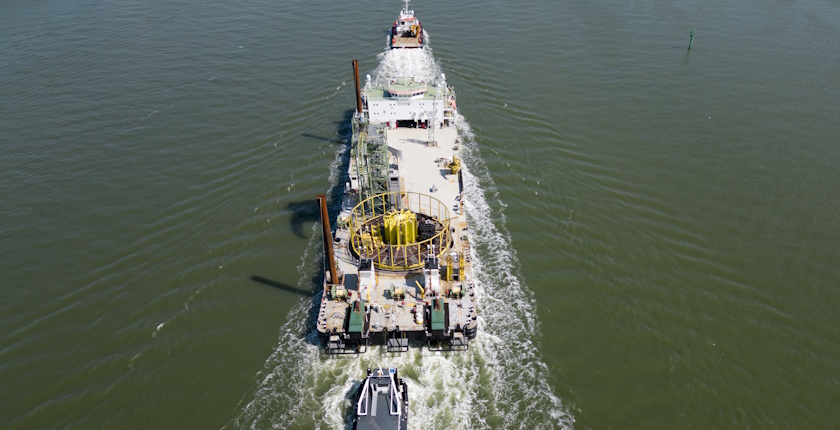
Azerbaijan is planning to export 4 GW through the corridor from the Caspian Sea via the Black Sea to Europe. The idea is for the link to consist of three cables, in fact, the article reads. Only a handful of manufacturers in the world can manufacture them for depths of up to 2,000 meters, and the number of ships that can lay them is limited, the news website added.
Kazakhstan and Turkmenistan and other Central Asian countries are interested in producing renewable electricity for exports to Europe, too.
The Black Sea submarine link project is valued at EUR 3.5 billion and it is expected to require up to four years, the media outlet noted. The European Commission is considering to fund the investment with EUR 2.3 billion.


Be the first one to comment on this article.