





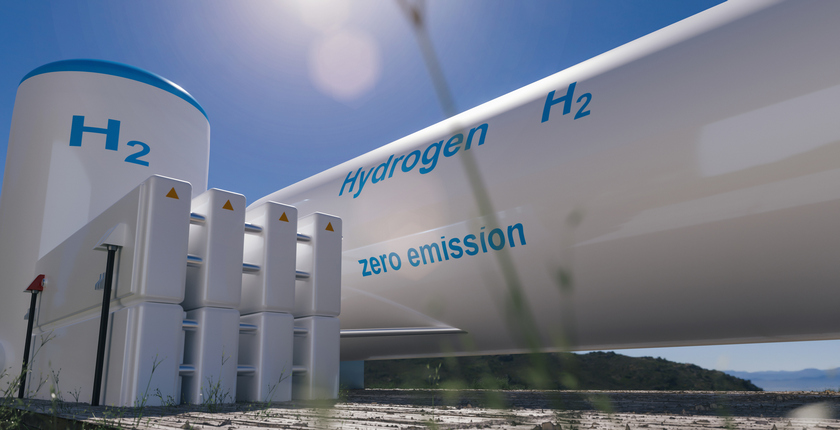
Photo: iStock


The European Commission has selected 15 renewable hydrogen production projects in five countries within the European Economic Area (EEA) eligible for financial support, in sectors including transportation and chemicals. Awarded at the second European Hydrogen Bank (EHB) auction, they will receive a total of EUR 992 million in subsidies.
The selected projects are expected to enable the production of nearly 2.2 million tons of renewable hydrogen over ten years, avoiding more than 15 million tons of CO2 emissions, the EU executive said in a press release, specifying that the firms operate in sectors such as transportation, the chemical industry, and methanol and ammonia.
The 15 projects are expected enable the production of an overall 2.2 million tons of green hydrogen
The subsidies, ranging from EUR 8 million to EUR 246 million per entity, are envisaged to help bridge the price gap between production costs and the market price, contributing to the acceleration of the deployment of cleaner fuels, the announcement reads. The funding will come from the Innovation Fund, sourced from the European Union’s Emissions Trading System (EU ETS).
EHB’s auctions are aimed at scaling up renewable hydrogen, which in turn would help replace natural gas, coal, and oil in hard-to-decarbonize industries and transportation.
The largest of the selected projects is Zeevonk Electrolyser in the Netherlands. Its eponymous developer pledged to produce 411,000 tons of green hydrogen over ten years, followed by the Kaskade project in Germany by Meridiam, with 354,000 tons.
The largest projects are in the Netherlands, Finland, Germany, and Spain
The proposed Kristinestad PtX facility in Finland is expected to produce 258 kilotons of renewable hydrogen, while projects called AGS (Spain), AGG280 (Spain), and H2-Hub Lubmin (Germany) are for 238 kilotons each.
Of the selected projects, 12 will receive fixed premiums of between EUR 0.2 and EUR 0.6 per kilogram of green hydrogen, the European Commission said.
For the first time, subsidies will be awarded to hydrogen producers with off-takers in the maritime sector conducting or using bunkering activities. They will receive premiums of between EUR 0.45 and EUR 1.88 per kilogram, or a total of EUR 96.7 million for three projects.
The selected projects are required to reach the production phase within five years. The next EHB auction is planned for end-2025, with a budget of up to EUR 1 billion, according to the press release.

Be the first one to comment on this article.