






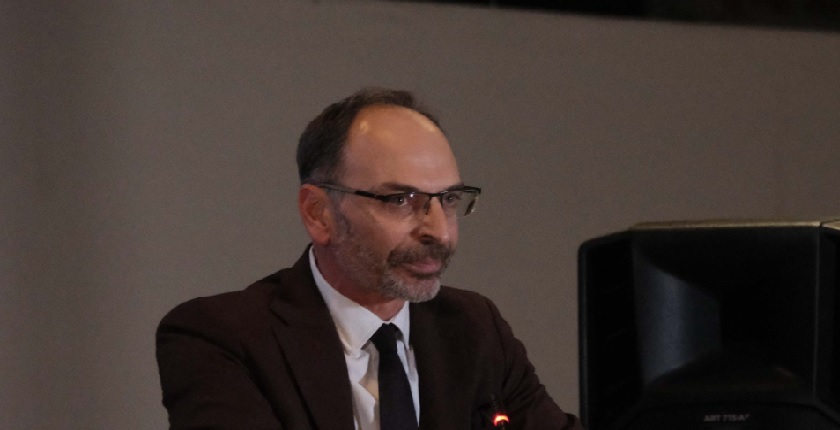
Photo: POSPIEF


Small investors in energy storage complain about an oligopoly in the sector as a result of a distorted licensing process.
The Panhellenic Federation of Photovoltaic Producers (POSPIEF) said the Hellenic Electricity Distribution Network Operator (HEDNO or DEDDIE) behaves in a way that supports large investors and excludes smaller ones when it comes to energy storage.
It should be noted that, based on a decree signed by the Ministry of Environment and Energy in 2024, storage projects of up to 10 MW can be materialized within the distribution network.
Ina a statement signed by chairman Giannis Panagis, the organization noted that on December 6, 2024, the operator published its first call for energy storage projects. There were only four days for submission, including the weekend. It left too little time for preparation as there was no prior notification.
Panagis: Project segmentation continues
Regardless, a large company submitted a total of 100 MW in smaller applications of 1 MW each. POSPIEF alluded that the bidder knew the formal prerequisites beforehand and took advantage of the process.
“The same tactic of project segmentation has also taken place in later licensing cycles”, said Panagis. Groups of small projects next to one another take up most of the available capacity. It should be noted that energy storage plants of up to 1 MW benefit from a quick licensing process that lasts up to 15 days, and naturally, it draws big players.
Larger capacity needed in distribution grid
POSPIEF warns that actual small-scale investors are left out, arguing that conditions are created for a black market for licenses. It would hurt the development of energy storage, desperately needed to balance renewable energy in the country.
Based on the above, the association asked for a limit of two projects per company, to maintain fair competition and avoid an oligopoly.
Furthermore, POSPIEF says available capacity for storage in the distribution grid has to be raised from 600 MW to 1 GW.

Be the first one to comment on this article.