





Photo: Dimitris Vetsikas from Pixabay


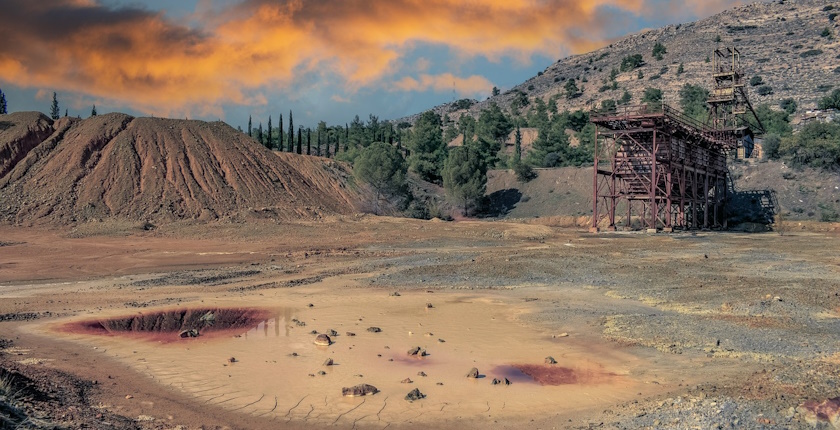
While Europe often claims to have the highest environmental and social standards globally, this cannot be said for its mining waste rules, according to a legal analysis commissioned by the European NGO Transport & Environment. As Europe aims to open new mines across the continent in the coming years to meet the 10% mining benchmark under the Critical Raw Materials Act, the NGO sought to assess whether the current regulations were fit for this purpose.
The European environmental standards are often mentioned as one of the main guarantees that the extraction of critical raw materials, such as lithium, not only in the European Union, but also elsewhere, will not endanger the environment and people.
Transport and Environment (T&E) noted that Europe is a continent where mining has been in decline for decades. Its mining rules are now outdated and, in some areas, less stringent than those of other countries such as Brazil or China, T&E said.
Of note, following the signing of a Memorandum of Understanding for a strategic partnership in sustainable raw materials between Serbia and the EU, Maroš Šefčovič, Vice President of the European Commission, said that the EU had the most comprehensive and stringent regulatory framework for sustainable development and environmental protection in the world.
One of the projects in focus was Rio Tinto’s Jadar lithium project.
EU Extractive Waste Directive falls short and lacks necessary clarity on a number of provisions
T&E commissioned a legal analysis of the 2006 EU Extractive Waste Directive (EWD), which was conducted by the Netherlands-based environmental law firm Hörchner Advocaten.
The lawyers have found that the EWD falls short and lacks necessary clarity on a number of provisions, T&E said.
The NGO summarized these shortcomings as follows:
- A lack of mandating the safest and best available mining waste technologies;
- Insufficient protection of the environment and communities:
- Mine closures: disasters waiting to happen?
- Unclear timelines and responsibilities.
According to T&E, one clear finding of the legal analysis is that there is a significant risk of fragmentation in the implementation of the directive, with many key provisions not clarified and left at the discretion of the member state.
For example, it is unclear who is responsible in the event of accidents or damage, and how strong or regular prevention and monitoring planning should be, the NGO stressed.
Finally, T&E called for revising the EWD and offered its recommendations.

Geomet in Czech Republic, underground lithium/tin mine as states in PFS/DFS tailings being used to backfill and remediate nearby old open pit mines. World beating mining ESG. Look at European Metals Holdings & CEZ (partners in Geomet) RNS’s.