







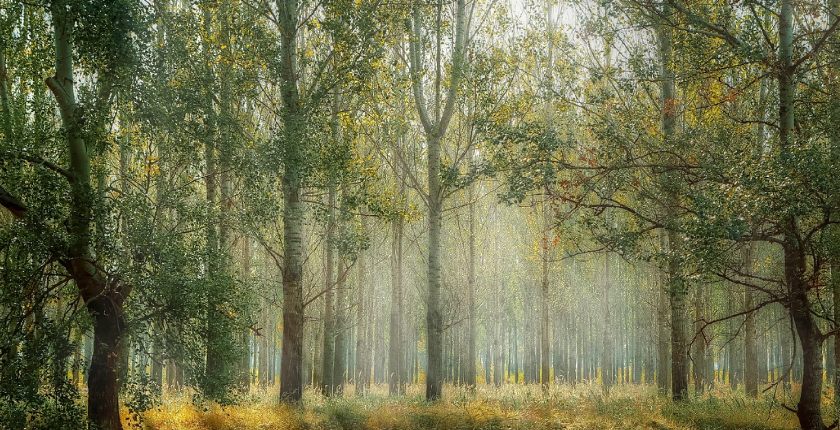
Photo: Valiphotos on Pixabay


The Greek Ministry of Environment and Energy is currently considering a new approach to save the country’s forests after this year’s devastating fires that burned around 1% of Greece.
Apart from climate change and rising temperatures, a particular problem concerning forests in Greece is that rural regions have been depopulated in recent decades. This means that people and animals are no longer able to remove excess biomass from forests like they did in the past. Branches, twigs and bushes accumulate and become a source of ignition during wildfires, allowing them to spread widely and easily.
New Minister Thodoros Skylakakis said recently that one idea is to provide carbon credits to companies to incentivize them to remove extra biomass from the forests. Afterwards it can be burned in biomass plants to produce electricity.
Skylakakis: An enormous opportunity for the biomass market
This way biomass that would probably be burned anyway will produce electricity, while the forests will have a better chance of surviving. Therefore the ministry sees this as a win-win situation for the environment and the energy sector.
Skylakakis noted that in Greece 4.4 million hectares are currently unmanaged. “We are going to subsidize the removal of biomass, thus changing the forest economy. We will provide carbon credits under a totally new way of forest management. This is an enormous opportunity for markets such as biomass,” he stated.
Local energy communities can be involved in biomass
Apart from the ministry, the Center of Planning and Economic Research (CPER) also believes it is the right way to go. It recently published a report about the island of Evia, where forest fires occur very often.
“Such a network can become a significant investing opportunity locally, providing new jobs. An interesting approach is to create energy communities where producers, lumberjacks and other professionals may participate,” the document reads.
Be the first one to comment on this article.