





Investment and Development Fund


Firms and farmers in Montenegro will be able to apply for subsidies of EUR 100,000 in total for renewable energy projects and to get loans of up to EUR 400,000 for photovoltaic systems.
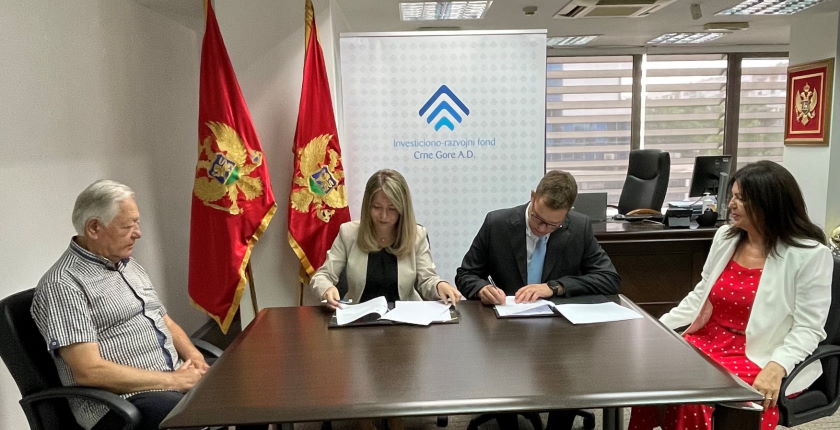
The Investment and Development Fund (IDF) and Environmental Protection Fund (Eco Fund) established cooperation in green financing in Montenegro. Executive Director Irena Radović and acting Executive Director Draško Boljević, respectively, signed a protocol. IDF’s President of the Board of Directors Velizar Kaluđerović and his counterpart from the Eco Fund Nataša Jevrić were present at the event.
The two institutions will organize a public call for grants of EUR 100,000 in total. The subsidies are intended for renewable energy projects. They will be approved by the Eco Fund with the assistance of the United Nations Development Programme (UNDP) in Montenegro.
Savings, productivity, emission cuts
The grants can cover as much as 40% of eligible expenses or up to EUR 25,000 per beneficiary. The project’s goals are to lower electricity expenses, increase the productivity of companies, entrepreneurs and farmers and significantly reduce carbon dioxide emissions, the Eco Fund stressed.
On its side, IDF said it would secure loans for the end-users through its new support program for the creation of green jobs in Montenegro and photovoltaic panels for firms and farms. The fund added it would accept applications from entrepreneurs, farmers, micro firms and small and medium-sized enterprises.
Program follows international climate agreements
The loans will be between EUR 3,000 and EUR 400,000, with a 3% annual interest rate. The repayment period can last up to 10 years including a grace period of as much as one year, the announcement reveals.
IDF’s head Irena Radović highlighted the importance of the partnership with the Eco Fund in the context of incentives for an increase in the use of clean energy and a boost to energy efficiency with the aim to cut carbon-dioxide emissions and achieve savings on electricity bills in the segment of micro firms, small and medium-sized enterprises and agricultural production.
She underscored the scheme would, together with similar programs, contribute to meeting Montenegro’s long-term goals with regard to the Paris Agreement, European Green Deal and the UN’s sustainable development goals.
Be the first one to comment on this article.