





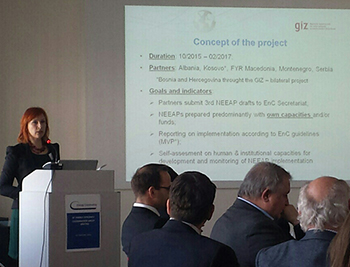
Photo: GIZ ORF-EE


The GIZ Open Regional Fund for South-East Europe – Energy Efficiency, under the auspices of the German Federal Ministry for Economic Cooperation and Development (BMZ), has initiated another important project supporting South-East European (SEE) countries in the process of transposition of EU acquis and fulfillment of relevant responsibilities in the energy efficiency sector. The project is implemented in coordination with the Energy Community Secretariat (ECS) and its Energy Efficiency Coordination Group (EECG).
The aim of the Strengthening capacities for implementing the NEEAP Cycle project are increased capacities of the SEE countries Bosnia and Herzegovina, Kosovo*, Macedonia, Serbia, Montenegro and Albania, who are members of the Energy Community’s EECG, to independently carry out the National Energy Efficiency Action Plan (NEEAP) cycle. This primarily refers to successful preparation of the country specific NEEAP, its implementation, as well as monitoring and reporting on the implementation, as set forth in the EU Directive on Energy End-Use Efficiency and Energy Services (2006/32/EU) and as reiterated by its successor Energy Efficiency Directive (2012/27/EU).
The support provided through this project is primarily directed at the development of the 3rd NEEAP as well as at adequate support regarding reporting on the implemented energy efficiency measures conducted in the last reporting period under the 2nd NEEAP.
NEEAP Cycle project’s objectives and short review of first results of the initial implementation phase have been presented on March 10 at the EECG Meeting in Vienna. Objectives include, among others, that addressed SEE countries submit their 3rd NEEAP draft to the EnC Secretariat in due time. Substantial objective is also that NEEAPs are predominantly prepared with national capacities and funds, as well as that reporting on their implementation is done according to the Energy Community Secretariat guidelines. Jasna Sekulović, GIZ ORF-EE Project Manager stated: “ORF-EE’s approach in supporting the partner ministries in preparing their 3rd NEEAPs is to encourage them to mobilize own capacities, whereas the GIZ will provide all mentoring and advisory support.”
Through three previous projects, successful collaboration with partner institutions in SEE, as well as through the establishment of a network for best-practice sharing in the energy efficiency sector in SEE, the ORF-EE has already secured a strong basis for the successful implementation of this project. This foundation has enabled a careful and honest screening and analysis of SEE partner institution’s NEEAP related needs. Furthermore, preparatory work meetings with experts and SEE partner have already been conducted setting the future pace for the project implementation.
During the Vienna meeting Ms. Sekulović also noted that the provision of advisory services to partner institutions, as regards the evaluation of own country specific NEEAP cycle needs, is part of ORF-EE’s continuous efforts in fostering achievement of sustainable project results through strengthening of ownership of processes, products and impacts of partners.