








Photo: Pixabay/Kenueone


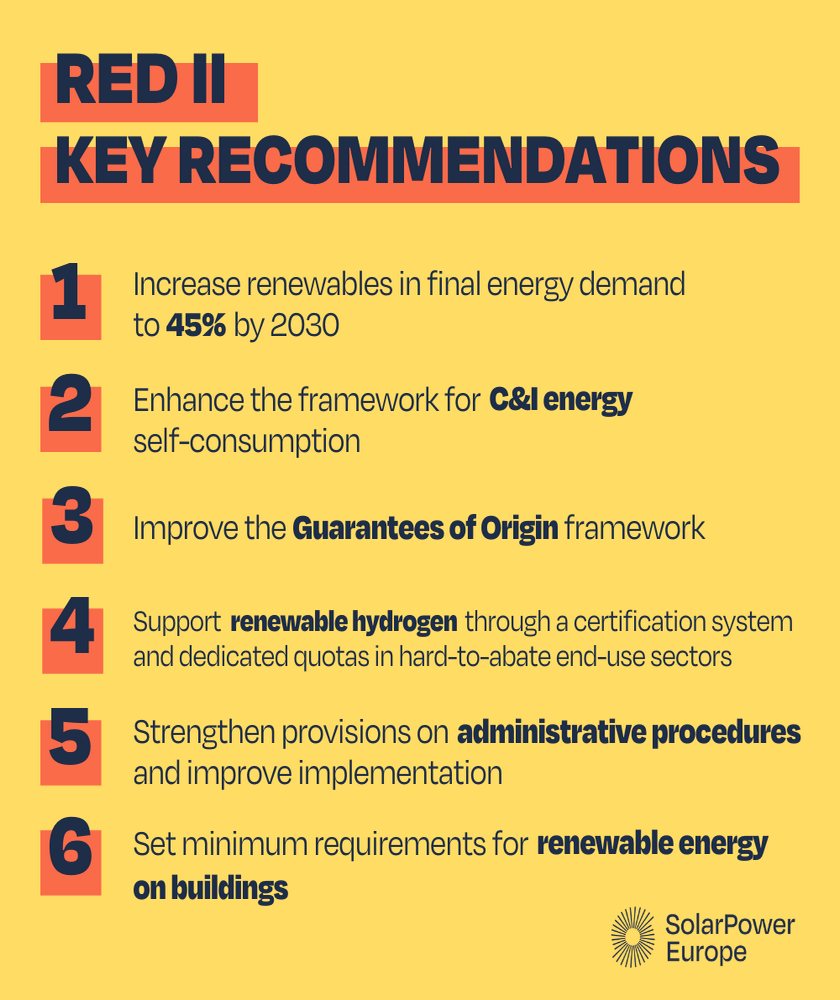
As the European Union (EU) is preparing to increase its 2030 target for the renewables share in final energy demand from 32% to between 38% and 40%, SolarPower Europe recommends setting the goal at 45%, which it believes the EU has the potential to achieve.
The 45% renewables share target by 2030 is among six key recommendations issued by SolarPower Europe ahead of the expected review of the EU’s Renewable Energy Directive (RED II). A review of the RED II is unavoidable, according to the association, given the EU’s increased ambition to achieve a 55% CO2 emissions reduction by 2030 and the planned upward revision of the renewables target.
The recommendations include enhancing the framework for commercial and industrial renewable energy self-consumption and improving the guarantees of origin framework and increasing its transparency.
SolarPower Europe also recommends supporting renewable hydrogen through a robust certification system and dedicated quotas in hard-to-abate sectors, while massively deploying new renewable electricity capacity, as well as setting minimum requirements for the generation of renewable energy on buildings.
An adequate RED II review could help kick start a “solar revolution”
The review of the RED II can help kick start a “solar revolution” by removing the remaining administrative barriers to renewable energy projects and strengthening the guarantees of origin framework, according to Walburga Hemetsberger, CEO of SolarPower Europe.
Miguel Herrero Cangas, policy advisor at SolarPower Europe, said that unlocking the solar generation potential of all buildings in the EU would boost sustainable job creation and drive higher climate ambitions, noting that commercial and industrial rooftop segments have a huge potential.
SolarPower Europe calls for supporting clean hydrogen producers and users
Aurélie Beauvais, the association’s deputy CEO, said that renewable hydrogen will be the missing link for the EU to reach climate neutrality by 2050, achieving the full decarbonization of sectors which are hard to electrify.
Apart from developing a robust certification system and ensuring the additional demand is met by new renewable capacities, the review of the RED II should also propose adequate support measures for producers and users of renewable hydrogen.




Be the first one to comment on this article.