







Photo: Schwoaze from Pixabay


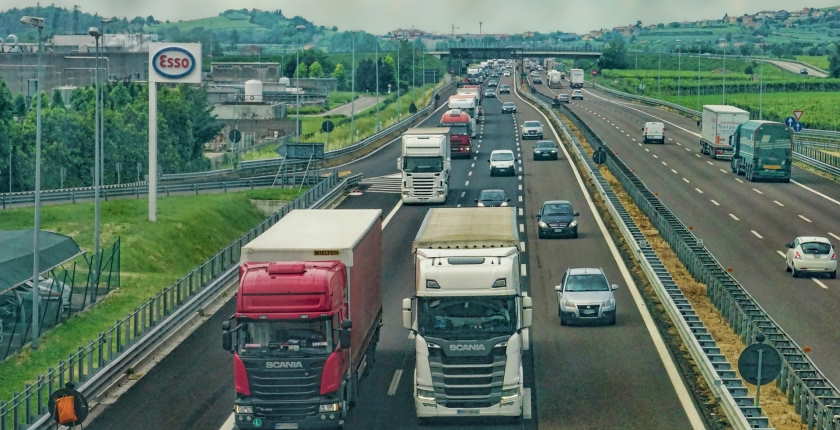
Hauliers with trucks that have lower emissions will pay lower tolls in the European Union as an incentive for reducing CO2 emissions and air pollution.
After more than three years of negotiations, the representatives of EU member states have agreed on new rules for tolls for heavy trucks based on the quantity of their emissions. The changes were proposed at the transport ministers’ meeting as part of a revision of road charging rules (Eurovignette directive).
Lorries account for 23% of EU road transport emisisons
Heavy goods vehicles are responsible for 23% of EU road transport emissions. The initiative to introduce CO2-based charging for lorries was launched in 2017.
Zero emission trucks should get at least a 50% discount on charges by April 2023 but the cut can be as high as 100% until the end of 2025
According to campaign group Transport & Environment (T&E), zero emission trucks, electrified or run on hydrogen, are set to get at least a 50% discount on charges by April 2023.
Countries can even give discounts of up to 100% for zero emission lorries, as is already the case in Germany, until the end of 2025. After 2025, countries can have discounts of between 50% and 75%, as is already the case in Austria, T&E said.
Annual tolling costs can reach up to EUR 25,000 per truck
The campaign group said annual tolling costs can reach up to EUR 25,000 per truck, or one quarter of the total cost of owning the vehicle.
New rules to help EU achieve CO₂ reduction targets for 2030 in road transport
According to the Council of the EU, the aim of the proposal is to address greenhouse gas emissions and other environmental impacts, congestion and road infrastructure financing.
Andreas Scheuer, German Federal Minister for Transport and Digital Infrastructure and chair of the meeting, said updated road charging rules will play a key role in the EU’s efforts to make transport greener and more sustainable, and to achieve the CO₂ reduction targets for 2030 in road transport.
He expressed confidence that the council would adopt a position by the end of Germany’s EU presidency, which ends on December 31.
EU ambassadors are expected to seal the agreement on December 18 while negotiations between governments and the European Parliament on the final law are expected to begin in early 2021, T&E said.




Be the first one to comment on this article.