






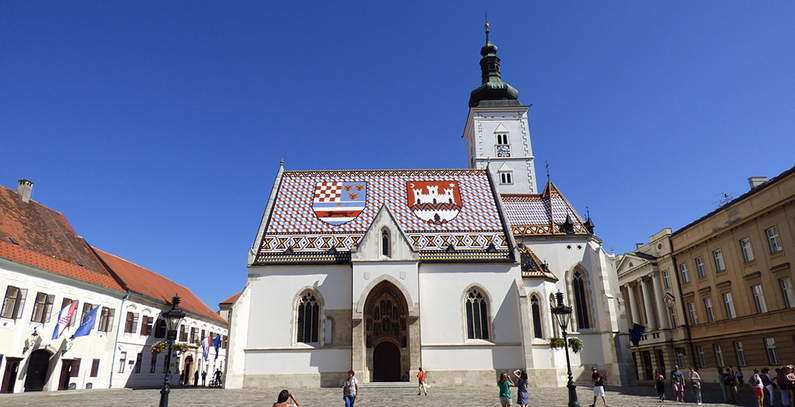
Photo: Pixabay


The Croatian government has sent to parliament a proposal of the country’s energy sector development strategy until 2030, with projections until 2050, which envisages increasing renewables’ share in gross final energy consumption to 36.4% by 2030.
Presenting the proposal of the strategy, Minister of Environmental Protection and Energy Tomislav Ćorić said that renewables’ share is projected to increase to 65.6% by 2050. He also recalled that the share of renewable sources in 2018 was 28%, which was far above the 20% stipulated by the European Union, according to a statement from the Croatian government.
The key objectives of the strategy are ensuring sustainable energy production in Croatia over the next 10 years, with projections until 2050, reducing import dependence, and strengthening the security of energy supply through the development of strategic infrastructure.
Given Croatia’s natural potentials, the bulk of renewables capacity should come from solar and wind energy, although other renewable sources should not be neglected, said Ćorić. At the WindEurope 2019 Conference & Exhibition in April, Ćorić said that Croatia aims to triple its wind energy capacities and boost solar capacities by a factor of 20 in the next 10 years.
CO2 emissions are expected to be slashed by about 36%
The implementation of the strategy will enable a transition to low-carbon energy through two types of activity – increasing energy efficiency and utilizing renewable energy sources as much as possible, Ćorić explained.
Speaking about increasing energy efficiency in the context of lowering overall energy consumption in the next 10 years, as well as in the period until 2050, Ćorić said that CO2 emissions are expected to be reduced by about 36%, according to the government’s statement.
These objectives, according to him, will require significant investment in renewable energy production as well as in the energy efficiency of buildings.

Be the first one to comment on this article.