







Photo: Facebook/UNDP MK


Share


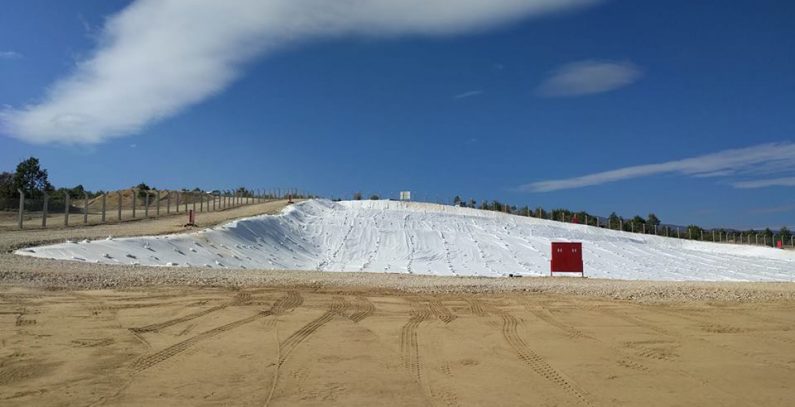
Macedonia has completed the construction of its first EU-standard sanitary landfill, in a USD 1 million project funded by the Japanese government that will enable the southeastern municipality of Gevgelija to shut down its current illegal dumpsite, which long ago exceeded its capacity, posing serious environmental and health risks.
Japanese Ambassador Keiko Haneda said that Macedonia faces serious waste management challenges, and that the construction of the first EU-standard landfill sets an example for other towns and regions in the country to follow. “I hope that this modern landfill will play a critical role in the future system for integrated waste management for the country’s southeast,” Haneda said, according to a press release from the UN Development Programme (UNDP), which helped build the new landfill.
“With the opening of this new facility in Novo Konjsko, we will finally solve the problem of solid waste, and soon we will start seeing the environmental benefits,” said Gevgelija Mayor Sasho Pockov. As operations get under way, residents will be asked to start sorting their waste, he said, urging them to embrace a greener approach.
Gevgelija landfill project took two years to cut through red tape
UNDP Resident Representative in Macedonia Louisa Vinton urged the municipality to put the new landfill into operation as soon as possible, noting that it took a full two years to navigate the bureaucratic labyrinth to secure all the necessary permits.
Now that the facility has been completed, “ministers, mayors and ordinary citizens will be able to see firsthand that an EU-standard landfill is anything but a garbage dump,” Vinton said, adding that UNDP hopes this will help speed the progress of the five planned regional landfills in Macedonia.
The landfill in the Gevgelija municipality is part of a broader USD 2.2 million effort by UNDP to support the municipalities most affected by the refugee crisis of 2015-2016.
Among the other initiatives funded by Japan were the refurbishment of a pumping station in Gevgelija, which doubled the municipality’s supply of arsenic-free drinking water, and a river regulation project to reduce flood risk along the Lipkovska River in the northeastern municipality of Kumanovo, according to the press release.



Be the first one to comment on this article.