







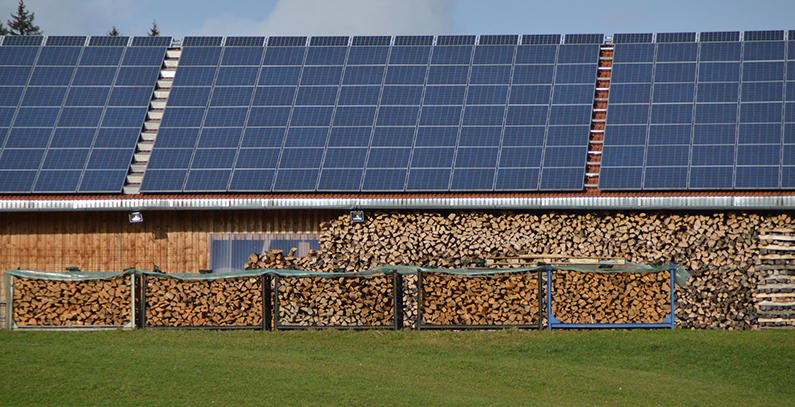
Photo:Pixabay


Cross border cooperation between Serbia and Croatia, supported by the EU, is leading to the construction of a number of small solar power plants and a cogeneration (CHP) plant. The solar plants will be built in the Croatian town of Vinkovci and the CHP facility in the Serbian town of Sombor.
The construction of the solar plants and cogeneration facility are part of the project Exploitation of Different Energy sources for Green Energy production – X–DEGREE. Agreements on partnership on the construction were signed first in Novi Sad and later in Vinvkovci.
The two projects are worth some EUR 1.6 million and are being financed from an Interreg IPA fund as part of a cross-border cooperation program between the two countries in the field of renewable energy sources.
The project leader is the University of Novi Sad in partnership with Public Utility Company Vodokanal Sombor, European Affairs Fund of Vojvodina, Vinkovci Water and Sewage and Agricultural Institute Osijek.
Several small solar plants of a total power of 380 kW will be set up on facilities of the communal services company in Vinvkovici while the CHP biogas-powered facility will be used to treat waste waters in Sombor.
Vinkovci waterworks official Dražen Milinković said six solar plants worth some EUR 545,000 will be set up. He specified that three will be located at the reservoir facilities at Lipovac (50kW), Vinkovce (140 kW) and Retkovce (40 kW) while the other three of a total power of 50 kW will be used to power waste water treatment facilities at Ivankovo, Cerna and Otok.
He said the solar plants will also help reduce carbon dioxide emissions from the drinking water production facilities, the website Seebiz.eu reported.
Vinkovci town Investment and Development Agency Director Mirta Štrk said the blueprints for the projects will include conditions to build the solar plants and cogeneration facility and added that experts from the Agriculture Institute in Osijek and Novi Sad University will use a mobile laboratory to work on recipes for the right blend of components to use for biogas for the cogeneration facility at the waste water treatment plant in Sombor.
By analyzing corn, which accounts for some 70% of biogas in Croatia, in the mobile lab we will get data to help us define the best possible combination of plant mass and corn hybrid to produce biogas, said Branimir Šimić of the Agriculture Institute of Osijek.


Be the first one to comment on this article.