

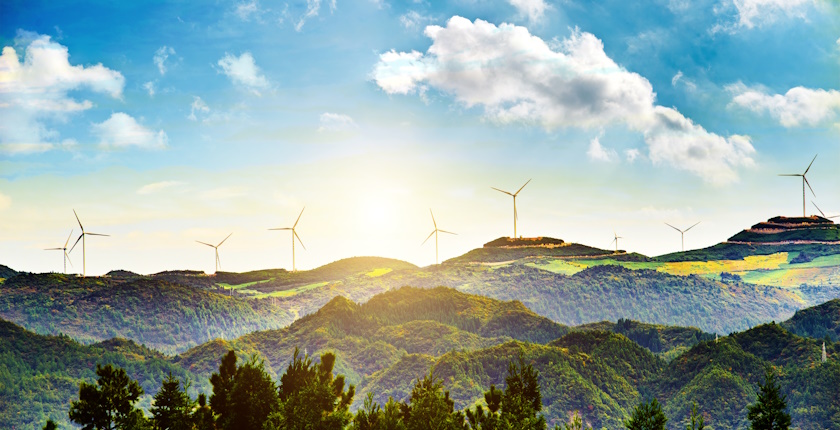
The Federation of Bosnia and Herzegovina said Energokul, the developer of a 200 MW wind farm project on the Vlašić mountain, isn’t required to produce an environmental impact assessment study to proceed with its investment.
The VP Energokul wind park project in the Central Bosnia Canton in the Federation of BiH got the initial approval for connecting to the transmission grid in 2022. The location is in the Ranča – Dobretići – Vitovlje Malo concession area, determined in the cantonal spatial plan, on the Vlašić mountain. There are two more wind projects for locations on the same mountain.
The developer, Energokul, filed a request in October to determine whether an environmental impact assessment study would be required for the planned 200 MW facility. The firm is registered in the nearby town of Travnik.
Very little time to object to decision
On the last workday of 2023, the Federal Ministry of Environment and Tourism published its decision that the study isn’t necessary. Stakeholders have only eight days in total to submit objections. Bosnia and Herzegovina consists of two entities: the Federation of BiH and the Republic of Srpska. FBiH has ten cantons.
The ministry found there would be no significant impacts on the environment and public health. It obligated the investor to conduct environmental protection measures during the planned wind farm’s operation. Among them, to monitor birds and bats. In general, the ministry said the company could pay damages on behalf of the harm to the environment, but not how much or to whom.
In 2015, environmentalists and cattle farmers protested against four concessions for wind parks on the same mountain.
First phase is for 140 MW
Energokul signed a concession agreement with the cantonal authorities in 2016 for 28.3 square kilometers. The new document shows the wind power plant would span 21.3 square kilometers of forests, pastures and meadows.
The firm plans to build the facility on the Vlašić mountain in two phases, of which the first one would be 140 MW. The project envisages 34 turbines with a diameter of up to 155 meters and a maximum of 6 MW. They would be placed on towers of up to 102.5 meters, it said in the request.
Nineteen machines are envisaged to be placed on the territory of the municipality of Dobretići, 14 would be in Jajce and only one in Travnik. The wind farm is scheduled to be put into operation by the beginning of October 2027.