

News

Up to third of company’s demand covered by solar

Published

September 22, 2015

Comments

comments icon

0

Share

Published:

September 22, 2015

Comments:

comments icon

0

Share

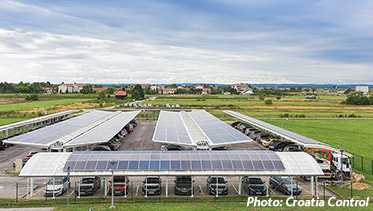
Croatia Control Ltd (CCL) said it installed a 345 kW photovoltaic facility on the roof of its parking lot in September. In the summer months the company will supply one-third of daily power consumption at its headquarters in Velika Gorica from the solar panels. The project is worth EUR 350.000, the press release said.

The air navigation service provider said it is one of the first in its branch in Europe to use the renewable energy source generating this much electric power for its business operations. Peak load varies from 500 kW in winter to 800 kW in summer because of more electrical load in the summer months due to the stringent air-conditioning regime applied to technical and operational facilities, Croatia Control said.

Flamtron d. o. o. from Kutina was hired for the overall project, with EMGD d. o. o. from the same town as the subcontractor.

Related Articles

Spajic Japanese Itochu Montenegro waste energy

Spajić: Japanese company Itochu eyes Montenegro’s waste-to-energy project

09 January 2026 - Prime Minister of Montenegro Milojko Spajić said a 50 MW incinerator is about to be built for municipal waste

ContourGlobal 500 MWh standalone BESS facility in Bulgaria

ContourGlobal installs 500 MWh standalone BESS facility in Bulgaria

09 January 2026 - ContourGlobal inaugurated a standalone battery energy storage system of 202 MW. It is participating in Bulgaria’s day-ahead and intraday electricity markets.

slovenia subsidies economy companies electricity

Slovenia to aid energy-intensive companies with EUR 30 million per year

09 January 2026 - Minister of the Environment, Climate and Energy Bojan Kumer said the bill addresses the serious challenges facing this segment of Slovenia's economy

croatia strategy bioeconomy

Croatia prepares first bioeconomy strategy

09 January 2026 - The Government of Croatia has adopted the Draft Bioeconomy Strategy until 2035, which foresees investments of EUR 200 million