







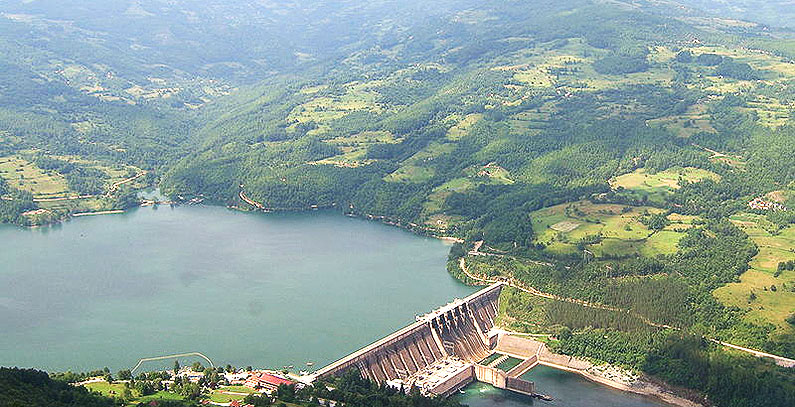
Photo: UNECE
Published
December 29, 2017
Country
Author


Share


Published:
December 29, 2017
Country:
Author
Share
Addressing water pollution and improving water quality and monitoring are key steps needed to face the challenges in the Drina River Basin of ensuring sustainable development in a transboundary context, UNECE published in its statement following the completion of the intersectoral and participatory assessment of the Drina River Basin, shared mainly by Bosnia and Herzegovina, Montenegro and Serbia.
In order to improve water quality in the Drina River Basin, the assessment underlines the need to control illegal dumping and promote sustainable practices in the agriculture, industrial and mining sectors. Responding effectively will require major investments, particularly in wastewater treatment and solid waste management facilities, best undertaken as a coordinated effort between the main basin-sharing countries.
The assessment revealed significant gaps in information about the status of waters in the basin, pointing in particular to the need to ensure the regular and systematic monitoring and analysis of water quality, especially regarding sources of pollution and their impact, including on ecosystems and health.
The assessment identifies significant benefits in the development of a common approach to improve water quality between basin-sharing countries. Initiatives to strengthen information by sharing in this critical area could build on successful river basin management planning and data management processes in the region, notably those in the framework of the International Sava River Basin Commission (ISRBC), the Drina River being a tributary of the Sava.
Improving water quality could bring multiple benefits
The assessment makes a strong case for action, highlighting how strengthening cooperation would generate a range of interconnected benefits.
Improving the quality of surface water and groundwater is a case in point. In terms of environmental benefits, addressing water quality would improve habitat conditions, in turn bringing significant economic benefits including through the development of tourism and fish-farming. In particular, nature-related tourism — which holds great potential thanks to the rich biodiversity and spectacular landscapes of the Drina Basin — would most directly benefit from addressing pollution and improving environmental quality. Such enhanced opportunities for nature-based recreational activities could also bring social benefits. Livelihoods of the basin’s population could be further improved with the promotion of local, high-quality agricultural products and/or renewable energy production.
In addition, improved water treatment could lead to cost-savings, including by reducing the need for alternative water sources such as bottled water, and bringing important health benefits in terms of disease prevention.
Identifying concrete actions across sectors
The assessment outlines a broad range of cross-sectoral actions that could help respond to the challenges of managing the interlinked water, food and land, energy resources and ecosystem services in the basin. A “nexus approach” to management that takes into account the interlinked nature of these resources is increasingly looked into as an effective means of enhancing water, energy and food security by increasing efficiency, reducing trade-offs, building synergies and improving governance while protecting ecosystems.
The proposed actions in the Drina Basin range from energy sector measures to rural development. For example, in the area of water flow regulation, coordinating the operation of the basin’s existing dams would not only allow for better flood management, but would also improve national energy security, increase electricity export opportunities and reduce annual greenhouse gas emissions. In addition, cooperation to improve solid waste management would generate economic benefits in the form of reduced expenses for hydro-power plant operators, since solid waste in the river interferes with their operations.
Overcoming challenges and looking ahead
The traditional organization of resource management is not conducive to working across sectors and even less so across borders. This represents a significant challenge if the full potential of green economic development in the basin is to be realized, UNECE said in the statement.
In response, the participatory “nexus” assessment brought together some 80 representatives of authorities and other key stakeholders across different sectors from the three basin countries.This enabled them to jointly identify opportunities for sustainable development in the Drina River Basin, reconciling economic growth with environmental protection. This increased awareness about cross-sectoral connections can help to bring about a more integrated approach to development in the region, although political commitment to strengthening action will be necessary.
In order to further promote cross-sectoral coordination and to extend the multistakeholder dialogue enabled through the assessment, it is recommended that full advantage be taken of current governance structures,also evaluating possible complementary arrangements and synergies between them where possible.
UNECE will continue to support the basin countries for the implementation of the assessment’s recommendations and to further strengthen transboundary and cross-sectoral cooperation in the region.
About the assessment
The assessment was carried out from 2016 to 2017 under UNECE’s Convention on the Protection and Use of Transboundary Watercourses and International Lakes (Water Convention) with the support of the project “Greening economic development in Western Balkans through applying a nexus approach and identification of benefits of transboundary cooperation”. The publication of the full assessment expands on the policy brief on the Drina River Basin nexus assessment.
In follow up to the assessment, financed by Italy, the Italian Ministry for the Environment, Land and Sea has committed financing to improve the monitoring of water quality and related cooperation in the Drina River Basin, as well as tackling pollution, among other issues. In cooperation with the Global Water Partnership Mediterranean, further assistance to countries in the Western Balkans in tackling “nexus” issues is also foreseen.
Practical tools have been developed in the framework of the Water Convention to support improved transboundary cooperation between countries.Of these, the nexus assessment methodology and Policy Guidance for identifying, assessing and communicating benefits of transboundary water cooperation, employed in this study, are two examples.


Be the first one to comment on this article.