


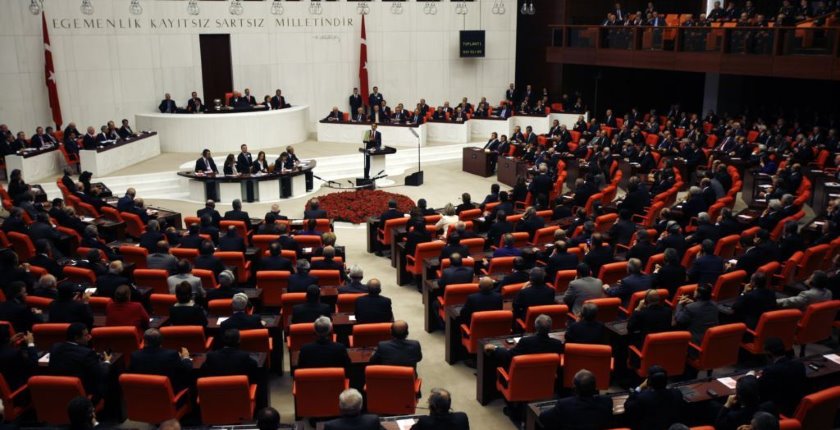
The Grand National Assembly of Turkey adopted a bill for the ratification of the Paris Agreement on climate change, so now only four signatory countries remain outside of the world treaty. The government in Ankara has been disputing its classification as a developed nation, and the lawmakers issued a separate statement in which they reject the status.
An overwhelming majority of United Nations member states immediately signed the Paris Agreement in April 2016, including Turkey, and all others followed. However, the country has been stalling until recently with the ratification of the world climate treaty as it disputed its classification as a so-called developed country party.
Following the promise by President Recep Tayyip Erdoğan at the UN General Assembly last month, the Grand National Assembly of Turkey voted unanimously for the ratification bill. It separately adopted a statement in which it rejects the said status.
The Paris Agreement envisages greater responsibility for the developed nations than their developing counterparts. Turkey’s protest declaration has little weight in international law given that it ratified the Paris Agreement.
Last call for remaining UN member countries
The treaty was adopted in December 2015. The United States withdrew during the previous administration but it rejoined it in January under President Jo Biden. South Sudan was the only other signatory to ratify the Paris Agreement this year before Turkey.
Minister of Environment and Urban Planning Murat Kurum said the country aims to become carbon neutral by 2053.
Iraq indicated it would ratify the Paris Agreement, alternatively known as the Paris Climate Accords, which would leave only Iran and Eritrea and war-torn Libya and Yemen outside of the treaty.
Turkey is adjusting to European Green Deal
Kurum earlier said Turkey would demonstrate sincerity and determination in the fight against climate change at the UN Climate Change Conference or COP26 in Glasgow, which is scheduled to start on October 31.
He added Turkey has prepared an action plan for the European Green Deal and that work is underway on introducing an emissions trading system and adopting a climate law.
The government intends to cut greenhouse gas emissions by 21% by the end of the decade. According to new report No New Coal by 2021, issued by E3G, Ember and Global Energy Monitor, Turkey has fifteen coal plants planned, most of which are likely to be
cancelled, and one (Hunutlu) under construction.