


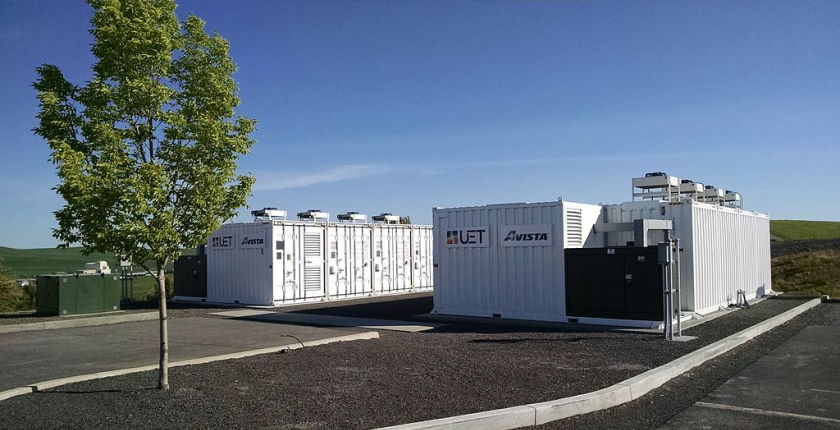
Newly founded company Progresiva applied for the installation and operation of an energy storage system at a site near Istanbul, the first of its kind in Turkey. Its parent Kontrolmatik has just started the construction of a lithium iron phosphate battery plant.
The Energy Market Regulatory Authority (EMRA) received the first application for the installation and operation of an independent electricity storage unit in the form of batteries, Anadolu reported. Progresiva Enerji Yatırımları Ticaret intends to install a facility with operating power of up to 250 MW and a capacity of 1 GWh, which means it would be able to work at maximum load for four hours.
The project in Silivri west of Istanbul is worth USD 250 million, the article adds. The area hosts the country’s only underground gas storage facilities.
Progresiva to sell electricity supplied from its battery system
The firm, which has just been founded by Kontrolmatik Technologies (Kontrolmatik Teknoloji Enerji ve Mühendislik), also applied for a supply license, to engage in wholesales and retailing.
Large battery systems are usually charged with excess electricity from renewable sources such as wind and solar power plants. They are convenient for immediate deployment in cases of demand spikes, drops in production and supply outages.
Parent company is building battery plant
The facility in Silivri would be the first detached battery unit in Turkey, as all other units and projects are integrated with power plants. According to rules that came into force in October, such systems must have maximum operating power of at least 2 MW.
Also this week, Kontrolmatik broke ground in Ankara for Turkey’s first lithium iron phosphate battery factory. Minister of Industry and Technology Mustafa Varank said the project is worth USD 180 million. The plant will employ 250 people in the first phase and grow to 600 workers, he added.
In neighboring Greece, there are 120 licensed projects for batteries with a total capacity of 9.64 GW and 47 projects combining renewables and storage (1.67 GW). The government prepared EUR 200 million in subsidies for battery storage units for this year.
Bulgaria intends to direct most of the cash support from its National Recovery and Resilience Plan to solar power projects with battery storage.
Comments (1)
recep
We want to build an energy storage system for our university. Can you give me a cost for the following size?
0.1 MWh
0.5 MWh
1 MWh
2MWh
3 MWh
4 MWh
5 MWh