

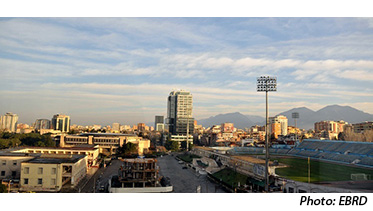
The municipality of Tirana and the European Bank for Reconstruction and Development have agreed to work together to upgrade the municipal infrastructure and make Albania’s capital more environment-friendly and to develop it in a sustainable way.
A memorandum of understanding (MoU) was signed in Tirana by the bank’s first vice president Phil Bennett and mayor Erion Veliaj. The parties list strategic areas of cooperation such as urban transport, urban roads infrastructure, water and wastewater services, solid waste management, street lights and overall improvements in energy efficiency, the statement on EBRD’s website said. In addition, an action plan designed to address the global climate change challenges will be developed.
“We believe that sustainable municipal infrastructure is a pre-requisite for climate-friendly urban development, which is at the heart of our green economy approach. Together with the city of Tirana we have identified key areas where EBRD’s expertise can contribute to the efficient and sustainable implementation of municipal projects. We strongly support Tirana’s drive to becoming a green capital,” Bennet said.
The parties list strategic areas of cooperation such as urban transport, urban roads infrastructure, water and wastewater services, solid waste management, street lights and overall improvements in energy efficiency.
“This is a very important step for our city. We are pleased to have the EBRD’s backing in this crucial undertaking. The implementation of sustainable and environmentally friendly projects will help in creating a reliable and sustainable municipal environment which will stimulate the capital’s economic growth, will improve living conditions for many citizens of Tirana and make a positive contribution to the green economy,” Veliaj stated.
EBRD will be supporting project preparation, institutional development and training, assistance with project implementation and procurement, and energy audits to support the assessment of energy efficiency of street lights and building in the city. Since the start of its operations in Albania, the EBRD has invested almost EUR 1 billion in 70 projects in various sectors of the country’s economy, the report added.