


Renewables

Timişoara’s renewables research lab second in Europe

Published

October 28, 2015

Country

Comments

comments icon

0

Share

Published:

October 28, 2015

Country:

Comments:

comments icon

0

Share

Digi24 television reported that after an EUR 8 million investment, the second renewable energy research laboratory in Europe was recently completed in Timişoara in western Romania.

The researchers are looking for the best way to use solar energy, which they say will ensure the world’s future, according to an article by Romania-Insider. The lab has more than 20 next-generation devices, brought in from the Netherlands, the United States, Israel, Germany, Italy and the United Kingdom. The facility also has a microscope, unique in Eastern Europe, which allows image capture at an atomic level. Only Poland has a laboratory with the same performance.

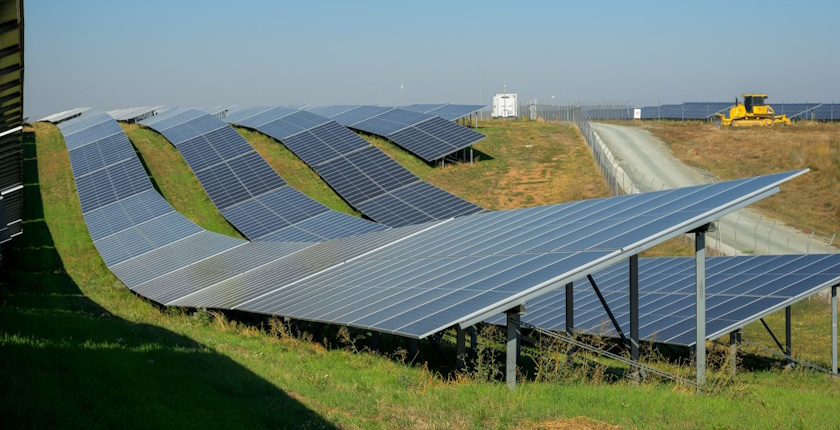
The system belongs to the National Research Institute for Electrochemistry and Condensed Matter. The building that hosts the laboratory is energy efficient, as it produces its own electricity through solar panels on the roof, the article said.

Related Articles

croatia hera dso tso hep ods prosumers self consumption scheme

Electricity system operators are significant barrier for citizen energy in Croatia

07 April 2026 - Croatia has begun preparations to establish an incentives framework for promoting self-consumption from renewable energy sources

Romania Timișoara seeks contractor for municipal solar park

Romania’s Timișoara seeks contractor for municipal solar park

07 April 2026 - The Timișoara City Hall has launched the procedure for technical design services and execution for its photovoltaic project

europe bulgaria us sunotec blackstone agreement

Blackstone Tactical Opportunities backs Sunotec

07 April 2026 - Sunotec has installed approximately 15 GW of solar capacity across multiple markets, including 5 GW of utility-scale solar

IEA's Birol warns of black April in global energy crisis

IEA’s Birol warns of ‘black April’ in global energy crisis

07 April 2026 - The energy crisis surpasses the shocks of 1973, 1979 and 2022 combined, said the IEA's chief Fatih Birol and warned of "a black April"