






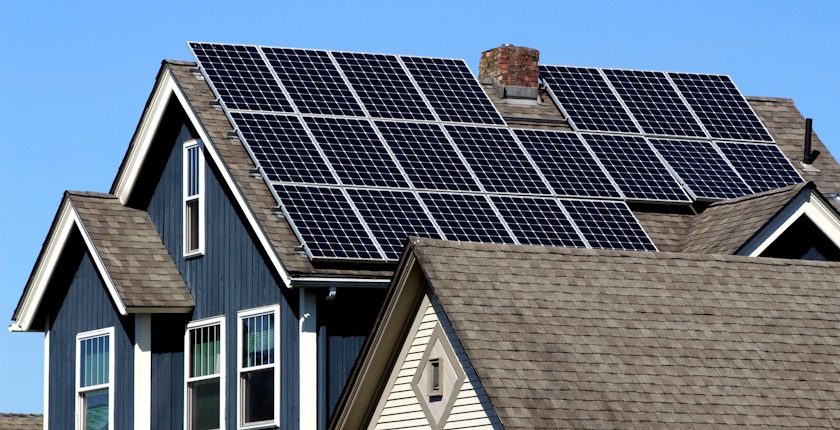
Foto: NxTide from Pixabay


Author: Tom Vasseur, Director, and Bianca Bittencourt, Strategic Communications Coordinator at the Cool Heating Coalition, a EUSEW partner organisation
While Europe’s fossil fuel import dependence might initially seem an abstract issue, the consequences are tangible for households across the continent. Space and water heating accounts for 77.6% of an average EU household’s energy use, and about a third of those are heated by gas. In 2025, 90% of our gas was imported from third countries, creating a vulnerability to energy coercion that could affect millions of homes.
Diversification of gas suppliers or away from fossil fuels?
Historically, Europe’s main fossil gas source was Russia. Following the full-scale invasion of Ukraine, the EU reduced gas imports from Russia from 45% to 12%. Recently, the EU adopted the REPowerEU Regulation, which aims to deliver on EU import diversification goals by permanently banning Russian fossil gas imports.
The challenge now is replacing gas imports as such to secure Europe’s energy independence. To do so, equally strong action is needed on the 2022 REPowerEU Plan’s other two pillars, saving energy and accelerating the clean energy transition. Right now, Europe is likely to meet only half of the heat pump deployment target outlined in the latter of those two REPowerEU pillars. That shortfall means reducing fossil gas demand by 60% of 2024 Russian gas imports rather than by 120%.
Delivering the clean heat transition by providing adequate funding
A study by LCP Delta for the Cool Heating Coalition found that at the EU level, there is a €78 billion annual spending gap until 2050 to deliver on the clean heat transition. Currently, the EU’s public and private sectors jointly cover only about half of that gap.
The good news is that Europe has many funding options to address this gap. For example, Europe currently subsidises fossil fuels with about €111 billion per year, which is money that should be diverted to decarbonised, renewable energy solutions. Additionally, the EU should incentivise business models like social leasing by addressing gaps in consumer protection like the Consumer Credit Directive not always covering social leasing schemes.
One of the most powerful tools for financing the shift to clean, renewable energy heating and cooling will be ETS2, which will price the emissions from buildings and road transport. This will drive the market away from fossil fuels and directly finance the transition. Through the Social Climate Fund, it will support the most vulnerable consumers. Member State treasuries may spend the remaining 75% of revenues freely on measures related to the transition or the social impact. On top of this, they should go beyond minimum legal requirements and earmark this funding for vulnerable households. This would help those most in need, alleviate political pressure, and legitimise ETS2.
Wanted: Strategic Autonomy
Regrettably, in December of 2025, ETS2 was postponed for one year, which sent a terrible market signal for clean heat. Now, there must be no further delays. Member States should use the extra time to support the switch to decarbonised, renewable energy and affordable heating, address housing inadequacies, and significantly reduce the energy needs of Europe’s worst-performing homes.
Since Russia’s full-scale invasion of Ukraine, real progress has been made to increase EU energy independence. Faced with a new fossil fuel price shock in the wake of the war in the Middle East, Europe needs to prioritise reducing geopolitical dependencies and strategic vulnerabilities. We have the legal framework and measures to end our fossil fuel dependency. All that is required is political will and follow-through.
This opinion editorial is produced in co-operation with the European Sustainable Energy Week (EUSEW) – the biggest annual event dedicated to renewables and efficient energy use in Europe. #EUSEW2026 marks the 20th edition and will once again bring together the community of people who care about building a secure and clean energy future for the next generations.
Check the currently open calls to join.


Be the first one to comment on this article.