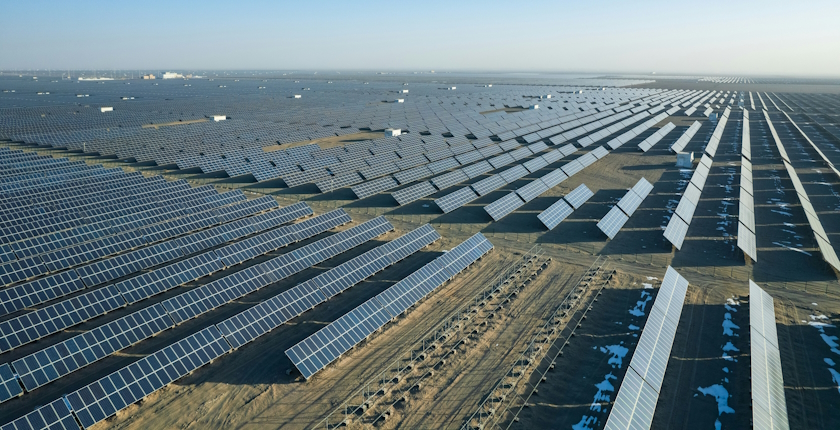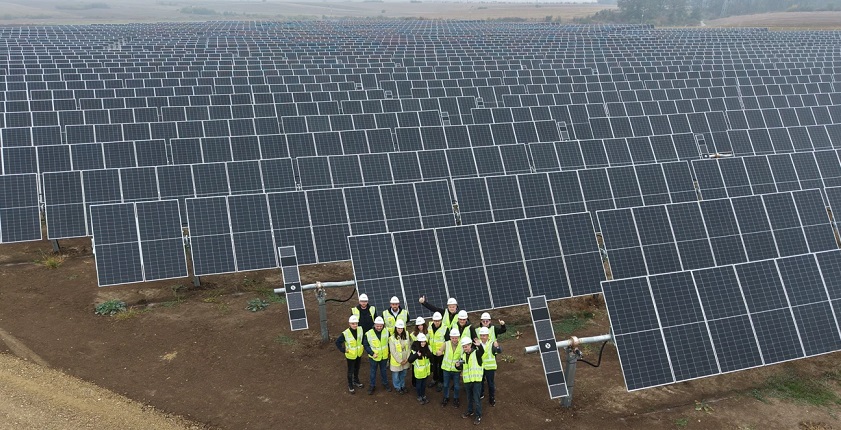



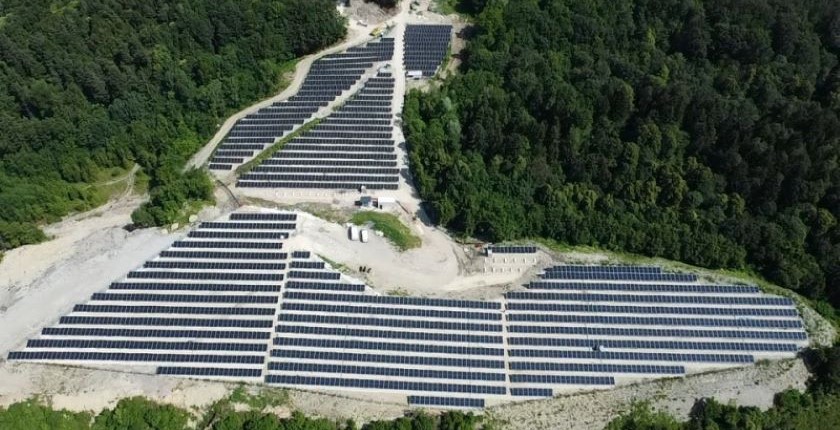
The Blate solar power plant, located on the former Trbovlje-Hrastnik open-cast coal mine, was put into operation. The project was implemented by Slovenian company Rudis on 6,500 square meters of degraded land.
Slovenian firm Rudis has commissioned its 1.5 MW solar power plant Blate, which will produce 1.7 GWh of electricity annually. According to the company from Trbovlje, it will be enough to supply 400 households.
The photovoltaic plant is built at the site of the former coal mine and tailings dump in the Trbovlje-Hrastnik complex. The plant is equipped with 2,600 monocrystalline panels with a rated power of 600 W and 13 diverters.
Blate is the second solar power plant built on degraded land on the surface mine Trbovlje-Hrastnik. State-owned Holding Slovenske elektrarne-HSE opened the 3 MW Prapretno solar power plant in April this year.
The Blate plant is the second power plant connected to the electricity distribution network in the municipality of Hrastnik in the Zasavska region.
“We have almost 5 MW of new solar panels in Hrastnik, but we must not neglect the few private houses that have joined. Given the number of inhabitants, I am convinced that Hrastnik did the most in the field of renewable electricity sources in Slovenia, “Radio Television of Slovenia quoted Hrastnik Mayor Marko Funkl as saying.
Funkl: Given the number of inhabitants, I am convinced that Hrastnik did the most in the field of renewable electricity sources in Slovenia
The degraded land of the former coal mine of approximately 6,500 square meters in the Zasavje region got a new purpose.
“This was not a regular basis, but we worked on concrete foundations for the substructure, which required more time and additional financial resources,” said the project director at Rudis Samo Kreže.
The electricity produced will reduce carbon dioxide emissions by 835 tonnes per year.
The electricity produced will reduce carbon dioxide emissions by 835 tonnes per year, said the firm from Trbovlje. All produced energy will be transmitted to Slovenia’s electricity distribution network.
The project was co-financed by the European Union from the Cohesion Fund and the Republic of Slovenia. The state is implementing the rehabilitation of the former coal mine Trbovlje-Hrastnik and supporting projects to transform the local economy in the Zasavje region and the Savinjsko-Saleški region, both dependent on coal.