







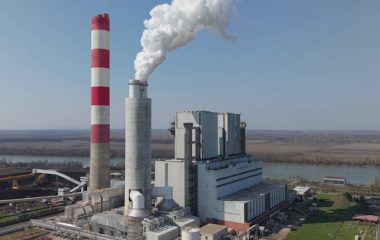
Photo: Freepik


The government passed the draft Strategy for the Management of Mineral and Other Geological Resources of the Republic of Serbia for the period from 2025 to 2040, with projections until 2050, so the National Assembly is required to put it to vote. With full appreciation of economic, environmental and social aspects, the implementation needs to contribute to improving the legal framework, establishing a balance between economic growth and environmental protection, remediation of abandoned mining facilities and securing a stable supply of critical and strategic raw materials, Minister of Mining and Energy Dubravka Đedović Handanović stressed.
After a turbulent public discussion process, the Government of Serbia adopted the draft Strategy for the Management of Mineral and Other Geological Resources of the Republic of Serbia for the period from 2025 to 2040, with projections until 2050. Several dozen objections and suggestions were accepted or partly accepted. However, the text of the strategy that will be passed on to the National Assembly for a vote hasn’t been published yet.
A special emphasis is on the development of risk management mechanisms, climate neutrality and the application of energy-efficient and low-carbon technologies, the government pointed out.
The strategy is based on the principles of sustainable utilization of natural wealth, biodiversity protection, climate resilience and the reduction of negative effects of mining activities, the announcement reads.
According to the report on the environmental impact of the strategy’s implementation, Serbia hosts many deposits of metallic, non-metallic and energy raw materials, groundwaters and geothermal energy. The authors of the accompanying document acknowledged that the exploitation of mineral raw materials in Serbia caused air, water and land pollution. Metals mining hub of Bor and Majdanpek and the Kolubara and Kostolac lignite basins are the most affected.
Another challenge highlighted in the environmental impact report are the abandoned mines, tailings dumps and mining facilities that require remediation and rehabilitation.
Strengthening state’s role in planning, oversight
The document sets a long-term framework for the responsible management of mineral resources and the strengthening the role of the state in planning, oversight and the improvement of the sector of mining and geology, in the interest of citizens and a sustainable development of local communities, the Ministry of Mining and Energy said.
A special emphasis is on critical and strategic raw materials, geothermal energy and rational utilization of natural resources
Minister Dubravka Đedović Handanović said the strategy defines programs and measures directed toward a secure supply of domestic companies and the energy system with mineral raw materials, job creation and a greater participation of the domestic industry in the value chain, as well as for reducing import dependency and strengthening the country’s economic stability.
She explained that the focus is particularly on critical and strategic raw materials, geothermal energy and rational utilization of natural resources, alongside the implementation of high environmental and security standards. This is the way, in her words, to protect the environment, improve work safeety and lower the risks for people’s health and the quality of life in local communities.
Treating protected areas responsibly
Dubravka Đedović Handanović added that the strategy clearly defines a responsible treatment of protected areas and the spaces of special natural value, through a principle of prevention and respect toward the protection regime, as well as the transparency in the processes of planning and decision making, so that the citizens would be informed timely and included in dialogue.
With full appreciation of economic, environmental and social aspects, the implementation needs to contribute to improving the legal framework, establishing a balance between economic growth and environmental protection, remediation of abandoned mining facilities and securing a stable supply of critical and strategic raw materials, the minister underscored. She said that in the long term it meant greater safety, a better quality of life and responsible development.
Be the first one to comment on this article.