


Serbia’s transmission system operator, Elektromreža Srbije, has decided to delay the connection to the grid of solar power plants and wind farms that don’t have a contract on developing a grid connection study. However, such projects could access the network if the investors secure balancing capacity.
TSO Elektromreža Srbije (EMS) announced to all interested parties that the conditions for delaying the connection procedure of variable renewable electricity plants have been met. Namely, it detected a risk to the safe operation of the power system due to the lack of balancing reserves.
The move results from the adequacy analysis conducted by EMS and published within the Transmission System Development Plan of the Republic of Serbia from 2023 to 2032. The Energy Agency of the Republic of Serbia (AERS) approved the plan a few days ago.
The adequacy analysis revealed risks to the safe operation of the power system due to the lack of balancing reserves, so the development plan states that the delay of the grid connections for power plants using variable renewable energy sources came into force.
This procedure aligns with the Law on the Use of Renewable Energy Sources adopted in April 2023.
The delay doesn’t apply to 27 wind farms and five solar parks
According to EMS’s notification, the delay doesn’t apply to projects with contracts for the development of grid connection studies.
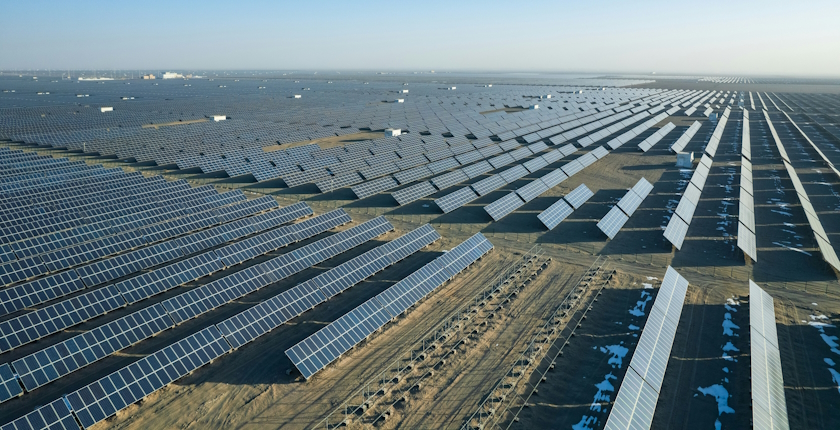
The list consists of 27 wind power projects with a total planned capacity of 4,200 MW and five future solar parks with an overall capacity of 352 MW.
The development plan includes a list of power plant projects that would be connected to the distribution grid and exempted from the delay. Eighteen of them are for wind power facilities with a combined capacity of 147 MW and 257 photovoltaic units of 684 MW altogether.
Total exemptions amount to 5,383 MW.
The adequacy analysis assessed that Serbia’s existing production capacities could withhold solar power plants and wind farms with a combined 5,800 MW. This is close to an earlier assessment.
EMS analyzed the impact of a larger penetration of renewable power plants on balancing as an ambitious scenario encompassing all requests for connection to the transmission and distribution grids until 2032. It envisages a total capacity of 19,742 MW. In that case, the analysis reads, the level of availability of balancing reserves is significantly lower.
Grid connection under certain conditions
The law still provides an option for projects without a contract on the development of a grid connection study to proceed without delay. The investors need to secure additional secondary reserve capacity as an auxiliary service. The capacity has to be offered to EMS.
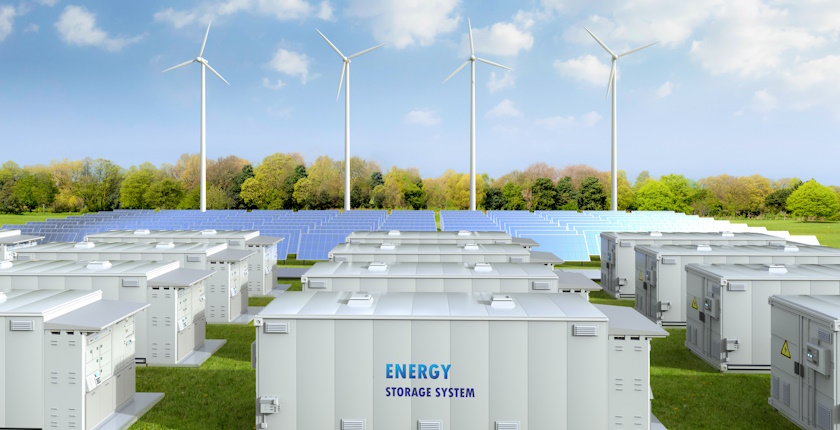
The investor can install it, offer its existing capacity, or sign a contract with a third party to provide it. For example, it can be a battery storage system.
The law stipulates that the delay won’t be applied if the adequacy analysis shows there are balancing reserves in the electricity system for new power plants.
Comments (1)
Milan Terzic
Well written, though in the last part – the term”auxiliary” should be replaced with the therm “ancillary”. Based on the standard terminology in the power and electricity sector, it would be more accurate to refer to this requirement as an “ancillary service.”