


The National Assembly adopted the changes to the Law on Energy including numerous novelties for households, businesses, investors and state companies. One of the main ones is lifting the ban on the construction of nuclear power plants.
The main goal of the changes to the Law on Energy is to transpose European regulations in line with Serbia’s obligations, according to the Ministry of Mining and Energy.
It published the draft law in August and the public consultations finished on September 10. The Government of Serbia adopted the changes in November.
According to the report from the public consultation, the ministry accepted some of the suggestions.
Net metering out, dynamic tariffs and an active customer in
The biggest news for households that produce electricity for self-consumption is the abolition of net metering, scheduled for December 31, 2026. But the mechanism will be maintained for existing prosumers until the end of their photovoltaic systems’ operational life. The ones that become eligible to become prosumers by December 31, 2026, would also be in the net metering scheme.
Net metering will be replaced by net billing, currently used for firms that are prosumers, according to the new provisions.
Contracts with dynamic tariffs are being introduced
End customers will have the right to enter into a dynamic tariff contract with any electricity supplier that supplies more than 200,000 end consumers.
The law stipulates the introduction of a mobile application, free for households and small buyers, with supplier offers listed for comparison.
The active buyer status and PPA contracts are tools to decarbonize the economy
Among the changes is the new active buyer status for firms that are prosumers.
An active buyer is defined as an end consumer, or a group of end consumers acting together, using or storing electricity produced in their facilities, independently selling it, or participating in flexibility services or energy efficiency measures, provided that the said activities are not their core commercial or professional activity.
Such entities can participate in the ancillary services and flexibility markets.
Additionally, the amendments facilitate power purchase agreements (PPAs).
The law defined new activities like aggregation in the electricity market and the production and trade of non-conventional fuels
The active buyer status and PPA contracts are tools to decarbonize the economy and prepare it for CO2 taxation. These options allow companies to produce green energy for self-consumption or buy it from an existing power plant and use it to reduce electricity costs and avoid paying CO2 taxes in Serbia and CBAM for exports to the European Union.
The changes bring additional activities in the energy sector – the production and trade of non-conventional fuels and aggregation. Aggregators enable end consumers and small businesses to participate in the electricity market.
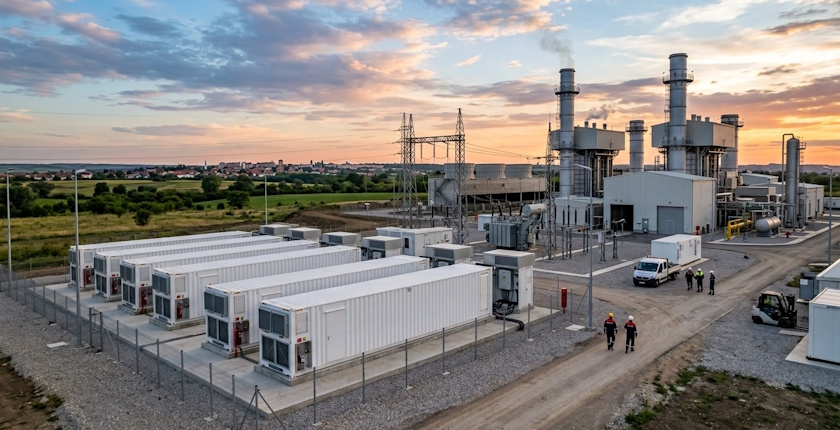
Electricity storage already existed as an activity, but the new law introduced the obligation to obtain a license. Certification for installers of renewable energy facilities is another new item.
Balance market and balance responsibility regulated
The changes regulate the balancing market and balancing responsibility and create conditions for the liberalization of the auxiliary services market and electricity market coupling with neighboring countries. The novelties will mostly affect the operations of state-owned utilities in the energy sector, as well as private investors.
The new law stipulates that all market participants are responsible for any balance deviations they create in the power system, that the party responsible for balancing is financially accountable for these deviations and obliged to contribute to maintaining the balance of the power system.
The ban on the construction of nuclear power plants has been lifted
It also prescribes the basic rules of the balancing market and the procurement of balancing capacities. The changes introduce the balancing capacity mechanism. Liberalization of the auxiliary services market creates the conditions for energy storage operators and active buyers to offer their services on the market.
The law prohibiting the construction of nuclear power plants is abolished. Yugoslavia, Serbia’s legal predecessor, adopted it in 1989, three years after the Chernobyl disaster.