

Renewables

Saint Nikola wind farm output tops 1.54 million MWh since launch

Published

March 16, 2015

Country

Comments

comments icon

0

Share

Published:

March 16, 2015

Country:

Comments:

comments icon

0

Share

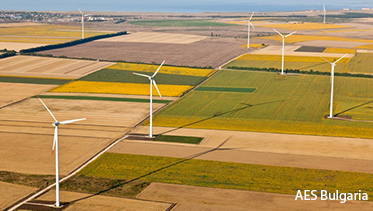
The Saint Nikola wind farm near Kavarna, in northeastern Bulgaria, has produced more than 1.54 million MWh of electricity in its five years of operations, US-based AES, which operates the plant, said, SeeNews reported.

Through its operation, the wind park has saved more than 1.2 million tonnes of carbon emissions, AES said in a press release over the weekend.

The Saint Nikola wind park, which is a joint project of AES and Bulgarian-German company Geo Power, has 52 wind turbines and a total installation capacity of 156 MW. The total investment in the park is EUR 270 million, of which EUR 198 million came from a bank loan provided by the European Bank for Reconstruction and Development (EBRD), the International Finance Corporation (IFC) and UniCredit Bank.

Saint Nikola covers an area of 60 sq km in the Kavarna area, on the Bulgarian northeastern Black Sea coast.

Related Articles

croatia batteries BESS study res croatia converence solar flex

Study maps 22 priority locations for BESS in Croatia

19 March 2026 - The national study identifies grid congestion locations and the need for battery energy storage systems in Croatia

photovoltaics in solar power station energy from natural. Close-up.

UniCredit Bank issues first green mini bonds in Serbia

19 March 2026 - UniCredit Bank acted as arranger and investor for the first green mini bond issuance on the domestic market in Serbia

slovenia eles solar power plants 2025

Slovenia’s solar capacity surges to 1.65 GW

19 March 2026 - Nearly 70,000 solar power units were on the grid in Slovenia in 2025, with a total installed capacity of 1,650 MW

montenegro serbia eps public hearing HPP Buk Bijela pluzine zivkovic

CEO of Serbia’s EPS: HPP Buk Bijela poses no environmental risk for Montenegro

18 March 2026 - A public hearing was organized in Montenegro as part of the procedure for assessing the project's cross-border impact