


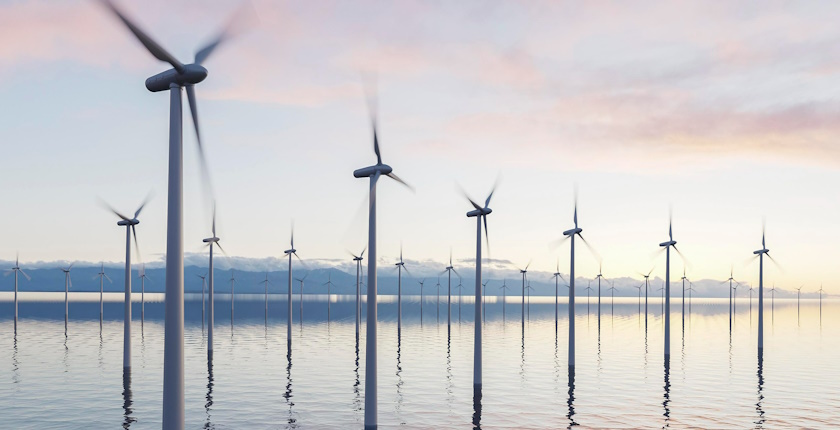
More than two thirds of lawmakers voted for Romania’s first offshore wind energy law. It obligates the government to pass the necessary regulation by mid-2025, after which it needs to launch concession tenders. Minister of Energy Sebastian Burduja expressed confidence that the first installations would come online in 2032.
Following last month’s vote in the Senate of Romania, 229 out of 330 members of the Chamber of Deputies were in favor of the offshore wind energy law, passing it to President Klaus Iohannis to sign. Bolstered by European funds, fiscal incentives and legal reforms, the country has lately turned into a solar power investment mecca.
After years of delays, the course is now set for the installation of the first turbines on the Black Sea. As for the onshore wind sector, it is just gaining traction again. Namely, the renewable electricity sector crashed a decade ago as the government couldn’t withstand the burden of subsidy payments.
On the other hand, the European wind industry is facing a subsidy race against the United States and China, possibly resulting in trade barriers. There were two lawmakers in the lower house of the Parliament of Romania against the bill and two abstentions. The government adopted it in December.
New law to unleash offshore wind energy investment for powering green hydrogen, ammonia industry
Authorities are confident the offshore wind law would contribute to efforts toward energy independence and the system’s resilience. Minister of Energy Sebastian Burduja reiterated his dedication to securing the safety of supply and affordable and green energy for all Romanian citizens.
“With the timeline set by the bill, we will be able to have the first megawatt of offshore wind energy produced in the national energy system by the year 2032. In addition, offshore wind energy production will allow us to strengthen the Romanian industry through domestic production of green hydrogen and value-added products based on green ammonia. The World Bank’s data show Romania has an offshore wind potential of 76 GW installed capacity, providing a favorable environment for the development of this type of renewable energy,” Burduja stated.
Start of competitive procedures for concessions depends on bylaws, determining royalties
The new legislation obligates the Ministry of Energy to initiate a study within three months to be able to detail the procedures, zones and potential. It highlighted the restrictions from maritime spatial planning rules as well as biodiversity preservation and environmental protection requirements.
The government is scheduled to approve the report by the end of March of next year, followed by necessary bylaws and royalties within the next three months. After that, the Ministry of Energy is envisaged to initiate a competitive procedure for awarding concession contracts.
First real projects in Balkans are emerging in Greece
Neighboring Bulgaria proposed its own first law late last year to facilitate the construction of wind farms on the Black Sea. However, it prompted opposition from locals and environmentalists, which contributed to the fall of the cabinet. It was replaced yesterday by a caretaker government.
Turkey is setting the stage for projects in the Sea of Marmara and the Aegean, but possibly even on lakes. At the same time, Greece has made the most progress in planning in the region covered by Balkan Green Energy News. The first investments are already under development. It should be noted that a string of giant projects are underway for maritime areas around Italy.
Additionally, Greece, Romania and Bulgaria are cooperating in grid development to enable the integration of renewables including offshore wind power. There is a proposal for an important interconnection under the Black Sea between Romania and Georgia.