


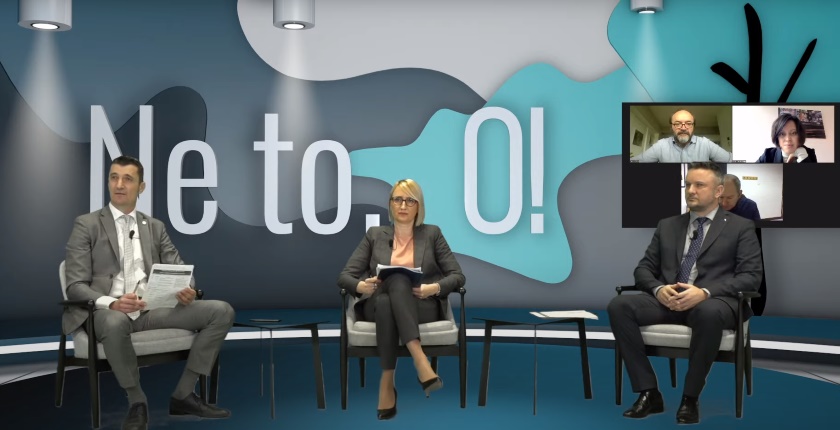
Vulnerable households in the Western Balkans usually can’t afford renovation or to replace old heating stoves and boilers even with a 50% subsidy. It is one of the messages from the Ne to. 0! conference organized by the RES Foundation. Helping people that suffer from energy poverty can boost efforts to eradicate fossil fuels in the sector, reach net-zero emissions, and improve air quality.
The second day of the Ne to. 0! event held by the RES Foundation was dedicated to the upgrades in heating that can bring air pollution to a minimum and slash net carbon emissions to zero. The speakers said the energy transition in the sector must be focused on the citizens and their welfare and health.
The RES Foundation’s Programme Director Jasminka Young highlighted the importance of empowering individuals in the Western Balkans to participate in the transformation and choose the right heating solutions.
Strict standards, limitations for wood burning
Energy poverty is a major challenge as many people can’t afford to renovate their homes and replace outdated devices even with subsidies of 50%. In regard to the burning of wood for heating, the participants suggested biomass supply must be sustainable and brought down to a minimum and that it also implies the use of the most efficient devices, which prevent most of the harmful gas and particle emissions.
The EBRD’s heating upgrade projects don’t lead to price increases
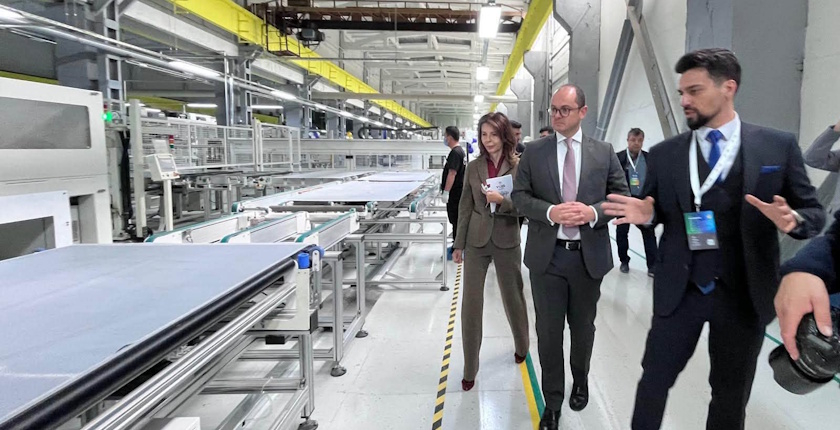
District heating must become as green as possible, said Bojan Bogdanović (pictured right), Principal Fund Manager for Renewable District Energy at the European Bank for Reconstruction and Development. In his view, the most effective way is to switch from charging users for the heated surface to their consumption, and the best way to start is to facilitate the renovation of the buildings in the city that are in the worst shape.
With programs for energy efficiency measures for buildings and the switch to renewable sources of heating, energy consumption savings can be directed to the expansion of the network, Bogdanović underscored. He said the EBRD implements such projects without increasing the users’ bills.
North Macedonia helping households install cleaner devices
Hristina Odžaklieska, Deputy Minister of Environment and Physical Planning of North Macedonia, said the government is aware air pollution is a major issue and that it is conducting programs for improving heating facilities. Local authorities are doing the same, mostly the capital City of Skopje.
Heating pumps are the most cost-effective alternative for gas-fired boilers
Femke de Jong from the European Climate Foundation (ECF) pointed to the results of a study conducted in Spain, Italy, Czechia, and Poland that electric heat pumps are the most affordable solution to replace gas boilers. Hybrid devices that also use hydrogen can be competitive in urban areas.
However, the authors warned that reliance on hydrogen in the residential heating sector could never become cost-effective for consumers.
Civic sector threw air pollution into political arena
Denis Žiško from the Centre for Ecology and Energy in Tuzla, Bosnia and Herzegovina, noted that air pollution became a political topic in the city five or six years ago due to the campaigning of the nongovernmental organizations. All political parties included it in their election programs, he said.
Žiško: Quality pellets are exported and the rest is sold and consumed in the Western Balkans
Subsidizing the introduction of pellet-fired stoves is not a good solution, according to Žiško, who claims high-quality pellets are exported and that the remainder is sold and used in the Western Balkans. A study showed that 34% of PM2.5 particles in Tuzla come from biomass, compared to the 24% attributed to coal and 20% for transportation.
Ambassador of Norway to Serbia Jørn Eugen Gjelstad noted that it was one of the first countries to introduce a tax for polluters, in 1991, and that it brought revenue for pollution reduction measures in almost all sectors of the economy.