


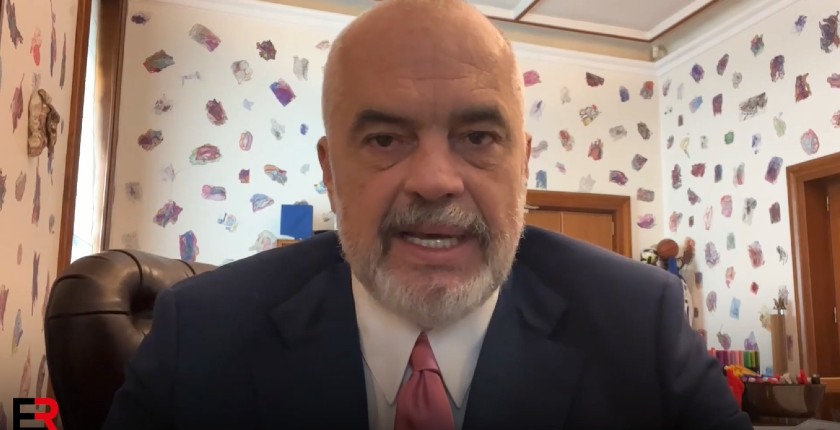
Albania’s Prime Minister Edi Rama called on citizens again to save electricity, saying it is not just about the financial cost. “The biggest question is not how much the price will rise, but whether there will be energy” in the winter, he warned.
Speaking to reporters after a cabinet meeting, Prime Minister Edi Rama said the current crisis in Albania is worse than the previous two, caused by an earthquake and the coronavirus pandemic. The winter is a very big challenge, he pointed out and noted that the European Union and countries like the United States are also affected.
The government will continue to subsidize electricity for families and small businesses and it will do its best to keep them from rising, Rama stressed and called on the population to save energy. It is not just about the financial cost, he said. “The biggest question is not how much the price will rise, but whether there will be energy,” the prime minister warned.
The government will do its best to keep electricity bills from rising
In his view, price controls are making inflation “a little less severe and painful than in other countries of the region.”
Earlier, the Energy Regulatory Authority decided to introduce a tariff on October 1 of 36 eurocents per kilowatt-hour for households for every kilowatt-hour they consume above the 800 kWh level every month. However, Edi Rama said today that the measure would be postponed. Demand fell 35% from a month ago and more rain is expected, he explained.
Folowing an improvement in weather conditions, Rama said the increase in the price of electricity for households that consume over 800 kWh per month has been postponed
The new tariff was supposed to be applied until the end of the year. Consumers would be charged 8.2 cents per kWh until they reach the 800 kWh limit.
Albania depends on hydropower for almost all of the electricity that it produces. In case of intense droughts like the one this year, the country imports more power, which has strained government finances given the unprecedented rise in prices. Rama said separately that hydropower plants cover 75% of consumption when they are working at full capacity.
Comments (2)
Bedri kercyku
Persh,ZRama,xerroje,ato sky marveshje e dritave,she be te periudhen tende,per u vhel???
Bedri kercyku
Do ish,ne ndertim tuaj,dhe te qeverise,we drejtoni,ta venir kete