

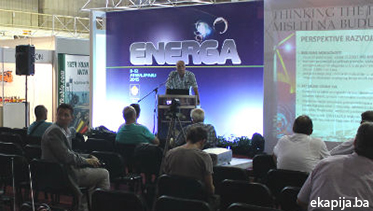
Bosnia and Herzegovina must remain energy independent, said Mirsad Jašarspahić, vice president of the Chamber of Economy of the Federation of Bosnia and Herzegovina, Ekapija.ba reported. Speaking on a panel about the energy sector’s development at the Energa fair in Tuzla, he stressed that BiH is obliged to accept and implement European Union’s regulations, including its complete energy policy.
The Government of the Federation of BiH, the larger of the country’s two entities, met the quotas defined by its action plan for renewables for last year, said Hajrudin Bećirović, head of Operator za OIEiEK, the authority for renewable energy sources and efficient cogeneration. „I want to stress that in 2014 there were no applications for biomass. We were obliged by law to switch those quotas, which were for biomass, to other forms of energy, which need to have a share of 5%. We expect to be able to intervene this year (too), while in 2016 we need to fill the biomass quotas,” Bećirović said. He added the quotas were switched to hydropower and solar power, so that last year’s obligations were met by 98.8%. This year is marked by a big number of investors interested in solar power facilities, Bećirović said.
The Czech Republic’s embassy represented six energy and mining companies at the fair which are open for local partnerships. As ambassador Jakub Skalnik told Ekapija.ba, one of them was the first supplier of a biomass-fired energy generator in BiH. Czech Republic can transfer its know-how in sectors of energy, renewables and biomass to its Bosnian partners, but conditions need to be met, he added, stressing the need for a friendly business environment.