


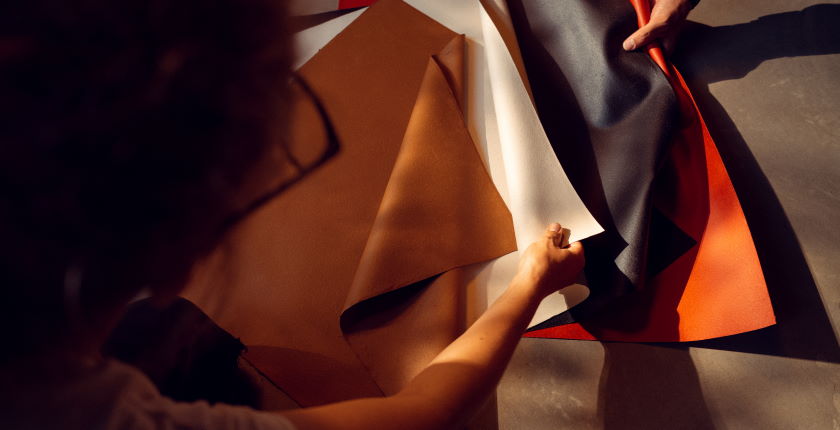
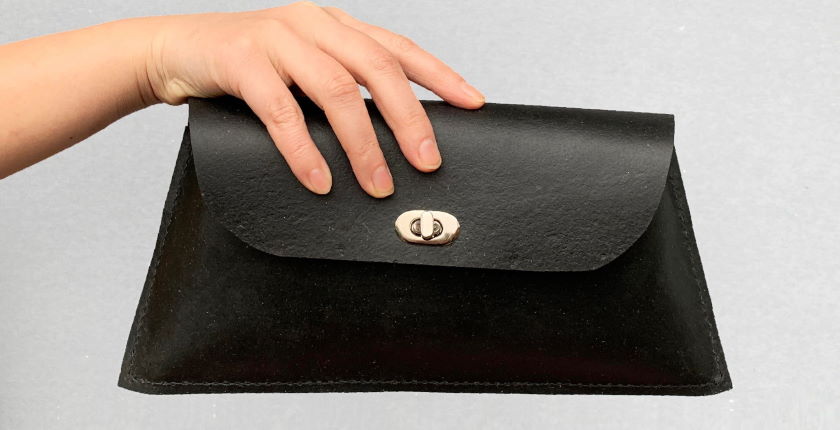
Beyond Leather Materials, this year’s winner of the GGF’s clim@ competition, counts on rising demand for plant-based leather alternatives as it builds up the manufacturing capacity for its solution. It produces the substitute from apple pulp and is considering to use different fruits.
Livestock farming accounts for 14.5% of anthropogenic greenhouse gas emissions if fossil fuel use in the sector is included. Hides then enter the leather production business, which burdens the environment further, especially with toxic chemicals and the impact of transport. Beyond Leather Materials from Denmark wants to disrupt the market with its cruelty-free alternative.
Enough with plastics
The startup substitutes leather with a material it produces from apple pulp, a byproduct that juice manufacturers are happy to get rid of. Chief Executive Officer and Cofounder Mikael Eydt says the team has probably most environment-friendly option anywhere for a clean transition.
Edyt: It doesn’t make sense to make more plastic in this world
“Artificial leather is now mostly polyvinyl chloride and polyurethane. It doesn’t make sense to make more plastic in this world. Just because it is vegan, it doesn’t mean it is sustainable,” he told Balkan Green Energy News.
The firm he cofounded in 2017 with Hannah Michaud won the clim@ competition this year. Finance in Motion organizes it on behalf of the Green for Growth Fund (GGF). There were two hundred applicants from sixty countries.
Seed funds secured following first prize at clim@
After that, Beyond Leather raised EUR 1.1 million in seed funds from Rockstart and Vaekstfonden. The round was led by angel investor Steen Ulf Jensen via the Jensengroup Investment Fund.
The startup has a strong team and “a strong case with great market potential” enabling change in society, according to Vaekstfonden’s Investment Manager Jesper Hart-Hansen.
The funds are intended for expanding the manufacturing capacity. The pilot phase with prototype machines is scheduled to begin early next year. The site is near Kopenhagen.
Production should be near commodity source
Eydt revealed the company has “big dreams” and that it is determined to become the biggest in the market. He added Beyond Leather intends to conquer Scandinavia and Germany. The business intends to build plants wherever the raw material is and the United States and China have the biggest potential, according to the CEO.
The company is confident in demand for vegan, sustainable options in the B2B segment
Beyond Leather does not compromise on quality and it is developing its product to become superdurable and flexible, Eydt claims and says it is paramount to stop animal slaughter and the use of toxic chemicals. The company is confident in demand for vegan, sustainable options in the business-to-business segment and intends to fully enter the market in the second quarter of next year.
Product range exceeds conventional leather options
It makes the final product from apple pulp in a day. Five kilograms of the commodity is needed to make a square meter of the leather alternative.
The portfolio is growing to offer colors and textures that can’t be found in the sector yet. Beyond Leather still includes partly plastic-based coating for water resistance, but it may be abolished soon.
The GGF’s clim@ competition was a great experience for us and we got connected to various potential partners who share our values and goals. On top of that, it was really inspiring to see all the innovative ideas and passionate teams that are working on a better future.
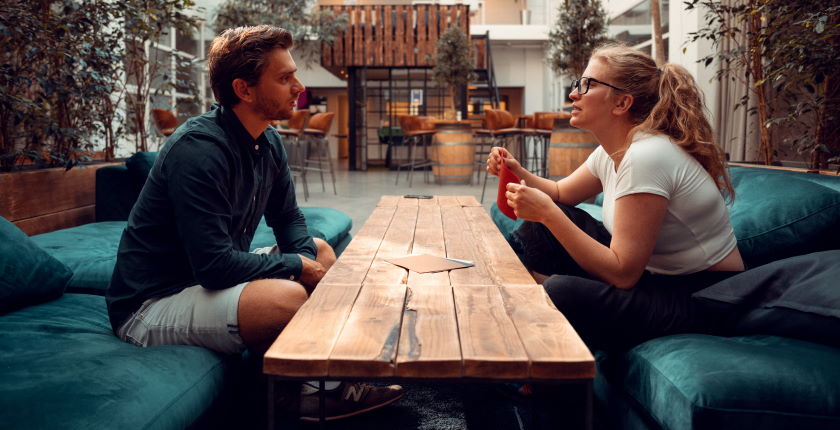
Chief Executive Officer Mikael Eydt and Chief Creative Officer Hannah Michaud
The startup is exploring options for using all kinds of fruit waste. There are already leather substitutes in the market made from mushroom mycelium and fungus. The material is popularly called muskin. Some small businesses use algae, coconut water waste, cork or fibers from pineapple and the banana tree.
Eydt asserted the team can meet standards for the shoe industry within two years. A longer-term goal is to obtain certificates for car seats, which must last a minimum of ten years.