


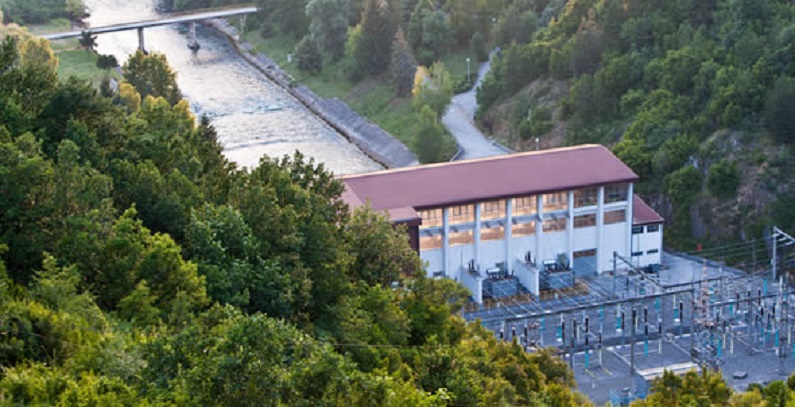
Faced with low water levels in lakes and artificial reservoirs, the Government of North Macedonia and power utility Elektrani na Severna Makedonija (ESM) have decided to terminate production in all hydropower plants and to protect the environment and biodiversity.
In order to secure stable power supply, ESM said it has started the procedure to purchase 20.45 GWh of electricity by November 15, Deutsche Welle reported.
North Macedonia’s energy sector is very fragile due to a chain of events in recent months. Most of the impact came from the forces of nature, and could be the result of climate change.
ESM will import 20.45 GWh of electricity
After the flood in Suvodol open-pit mines in August, production in power plant REK Bitola was lowered, which forced a boost in the utilization of hydropower plants. A subsequent drought lowered water levels in reservoirs and lakes. The lack of water for cooling caused a delay in restarting coal power plant REK Oslomej (125 MW), while one unit of REK Bitola, with an installed capacity of 233 MW, is currently in overhaul.
A flood and drought are causing major issues
Furthermore, the consumption of electricity has increased with the start of the heating season.
REK Bitola and REK Oslomej, which have an installed capacity of 825 MW in total, generate about 60% of electricity in the country, while the overall 550 MW in hydropower plants accounts for 35%. At the moment, generation capacities over 900 MW are out of operation in the country.
Government: 2020 is a year with extremely bad hydrological conditions
Prime Minister Zoran Zaev, Minister of Environment and Spatial Planning Naser Nuredini, Minister of Agriculture, Forestry and Water Economy Arjanit Hodža and the director of ESM Vasko Kovačevski decided to halt hydropower plants.
Any further outflow will endanger the ecological minimum necessary for wildlife
The government said, citing data from the past 15 years, that hydrological conditions are extremely bad this year. Any further outflow in hydropower dams will endanger the ecological minimum necessary for wildlife, it added.
In order to protect the environment and biodiversity and in accordance with obligations stipulated in water permits, it is necessary to temporarily stop the production of electricity from hydropower plants, the government said.
ESM will buy electricity for balancing services until the normalization of water levels, the statement reads.